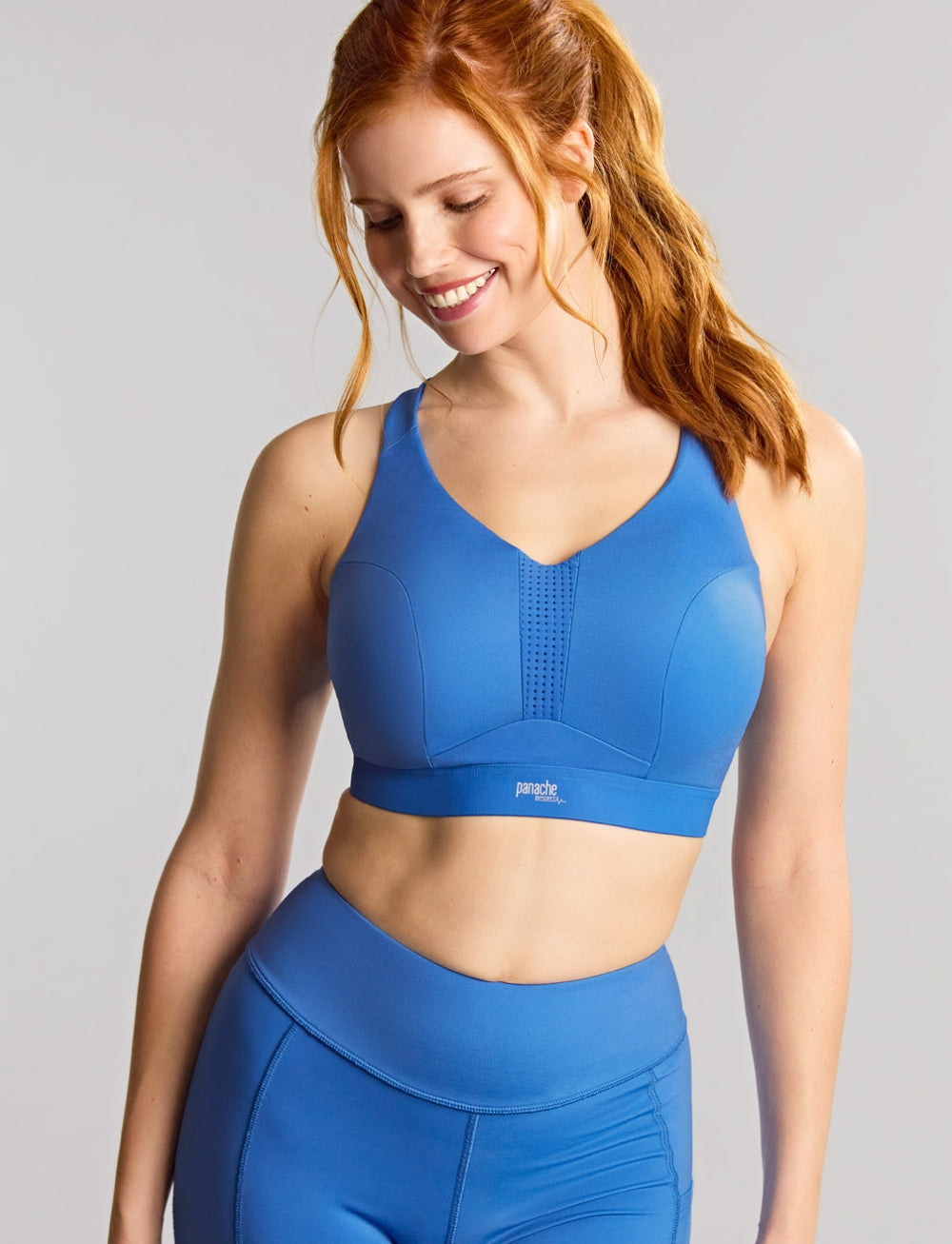
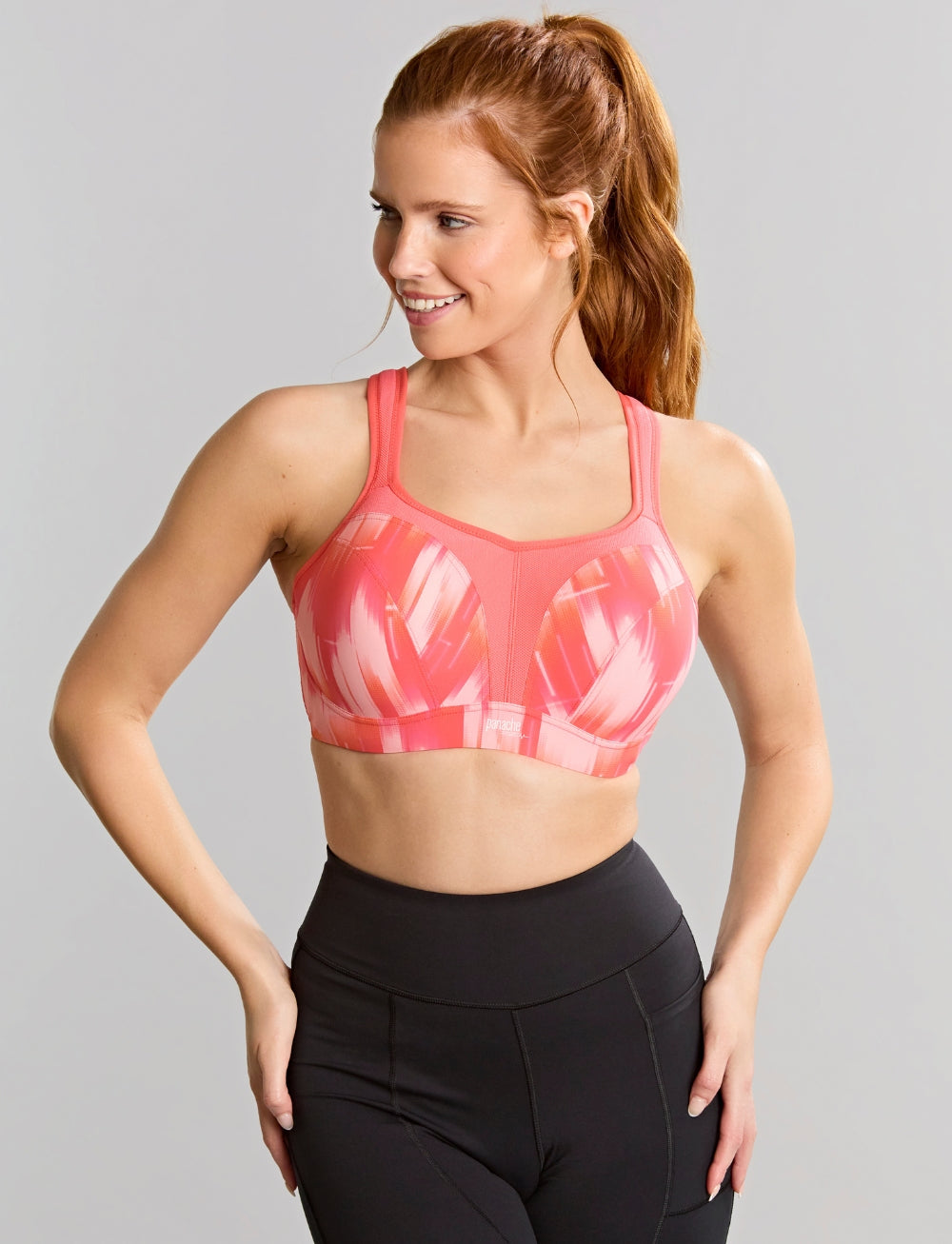
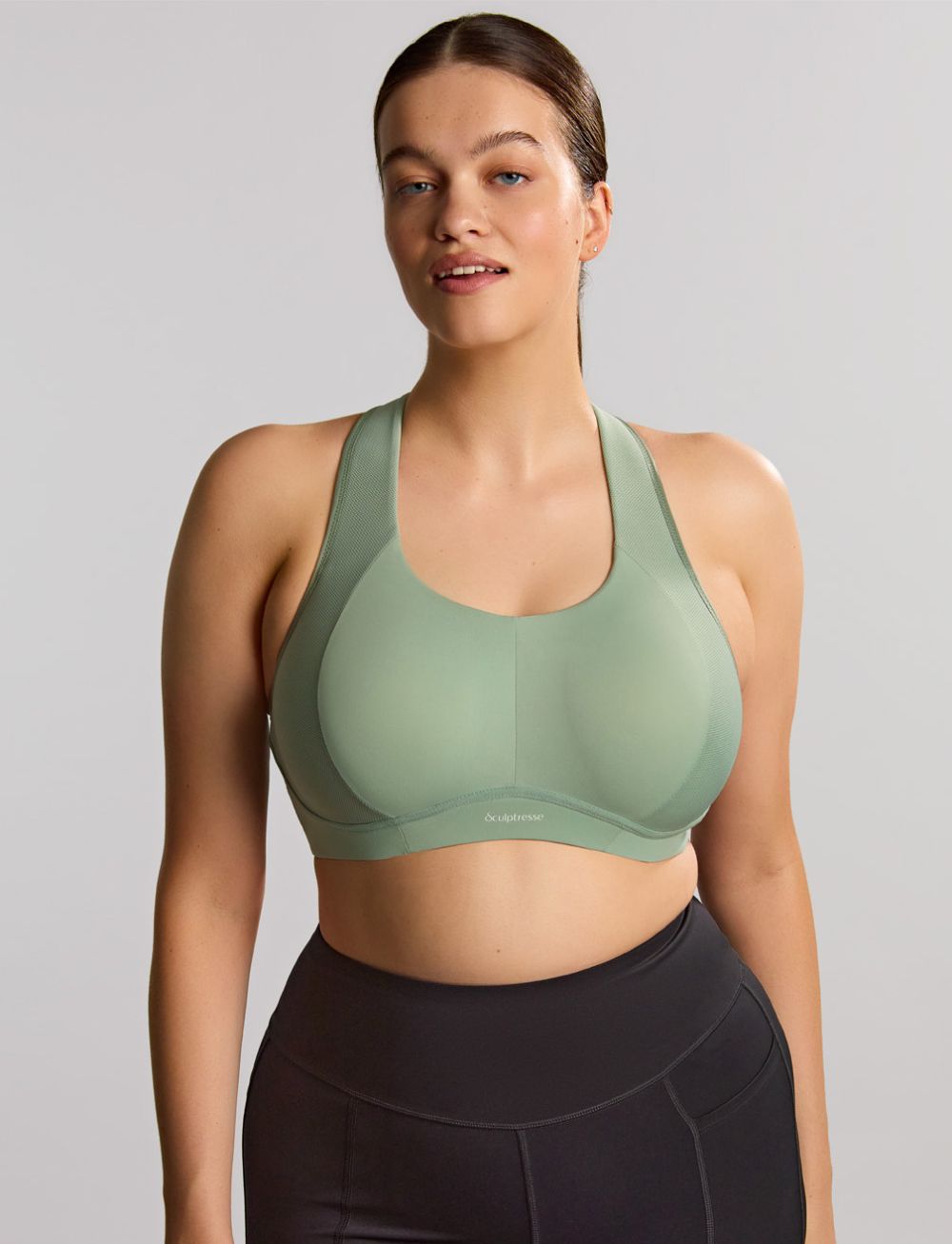
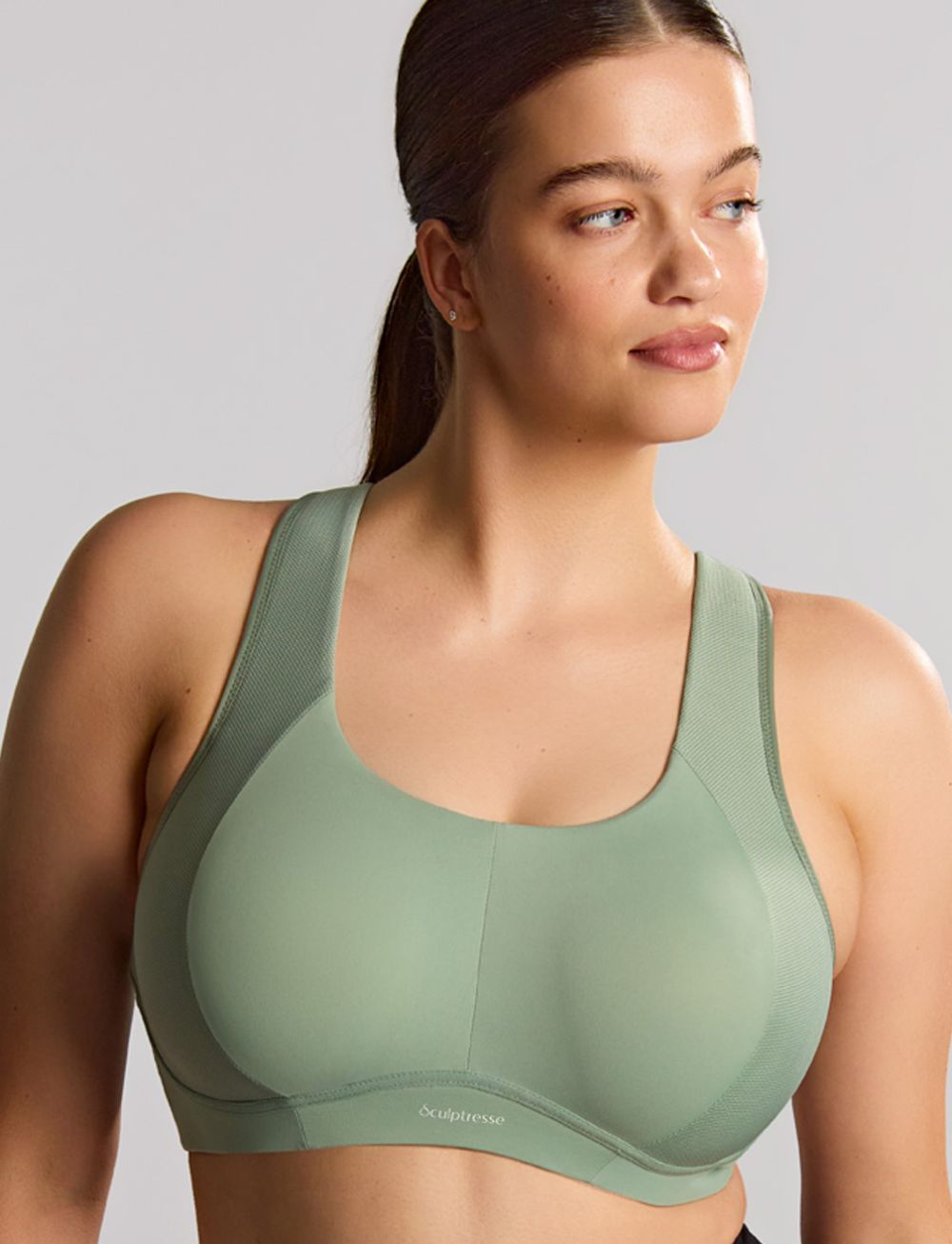
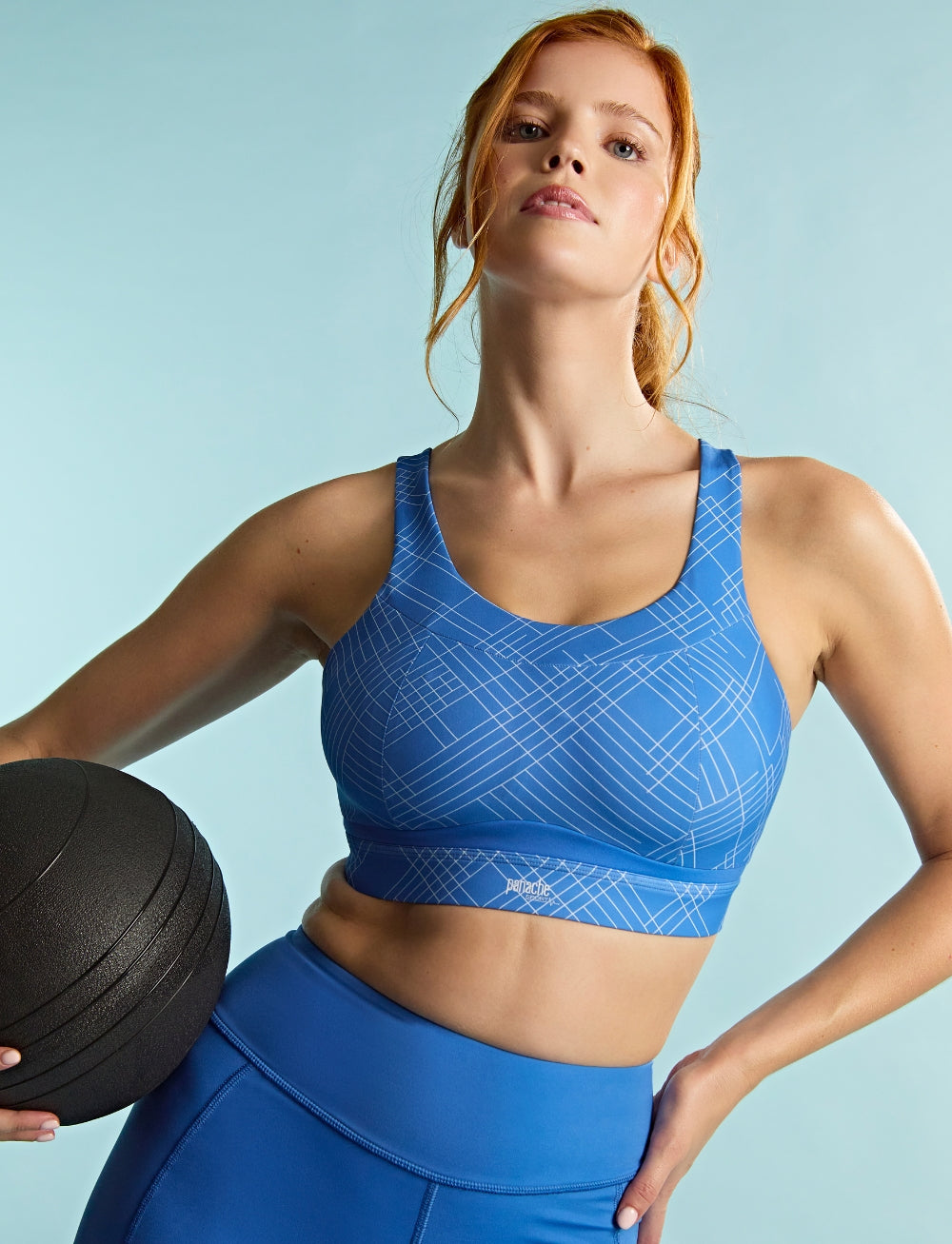
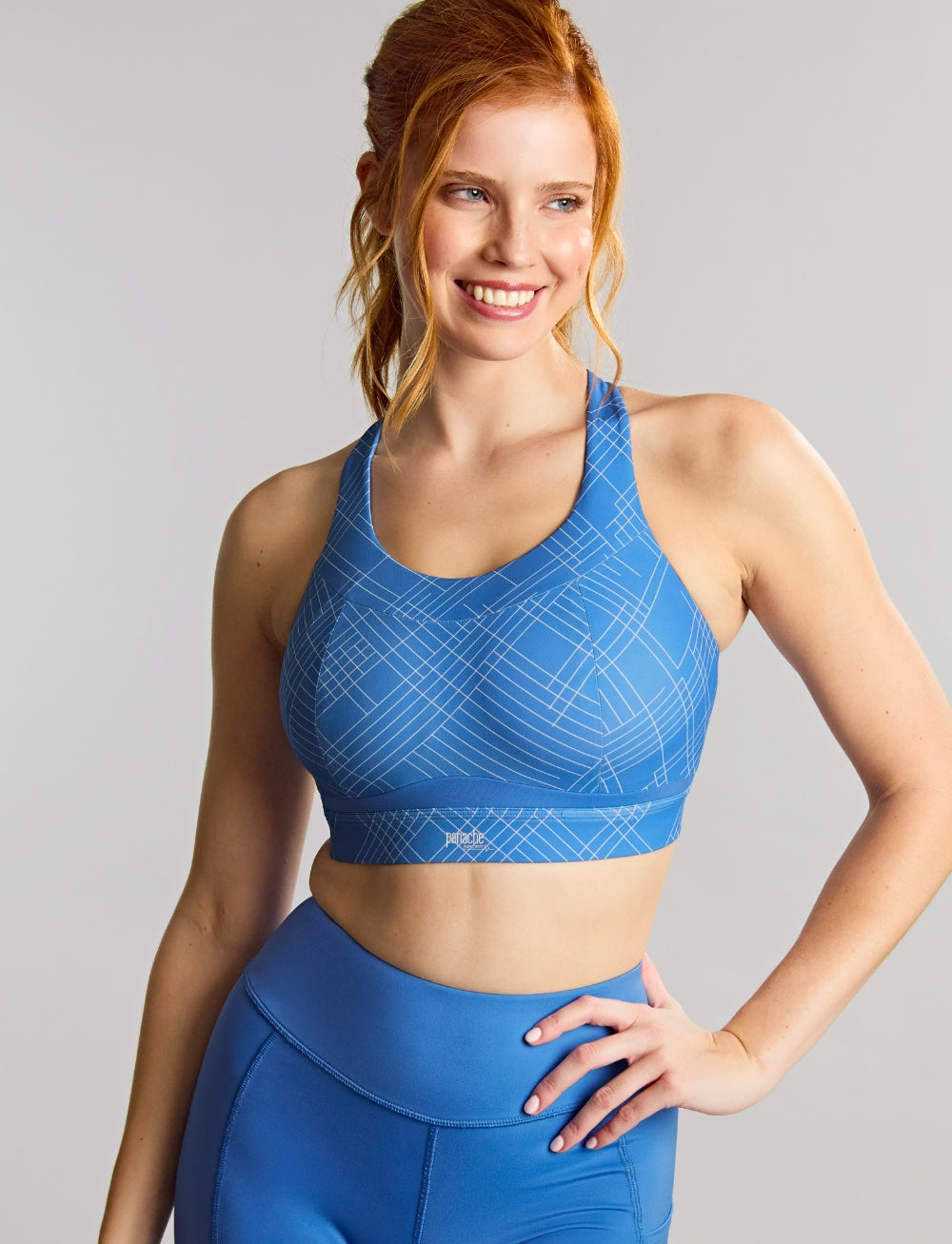
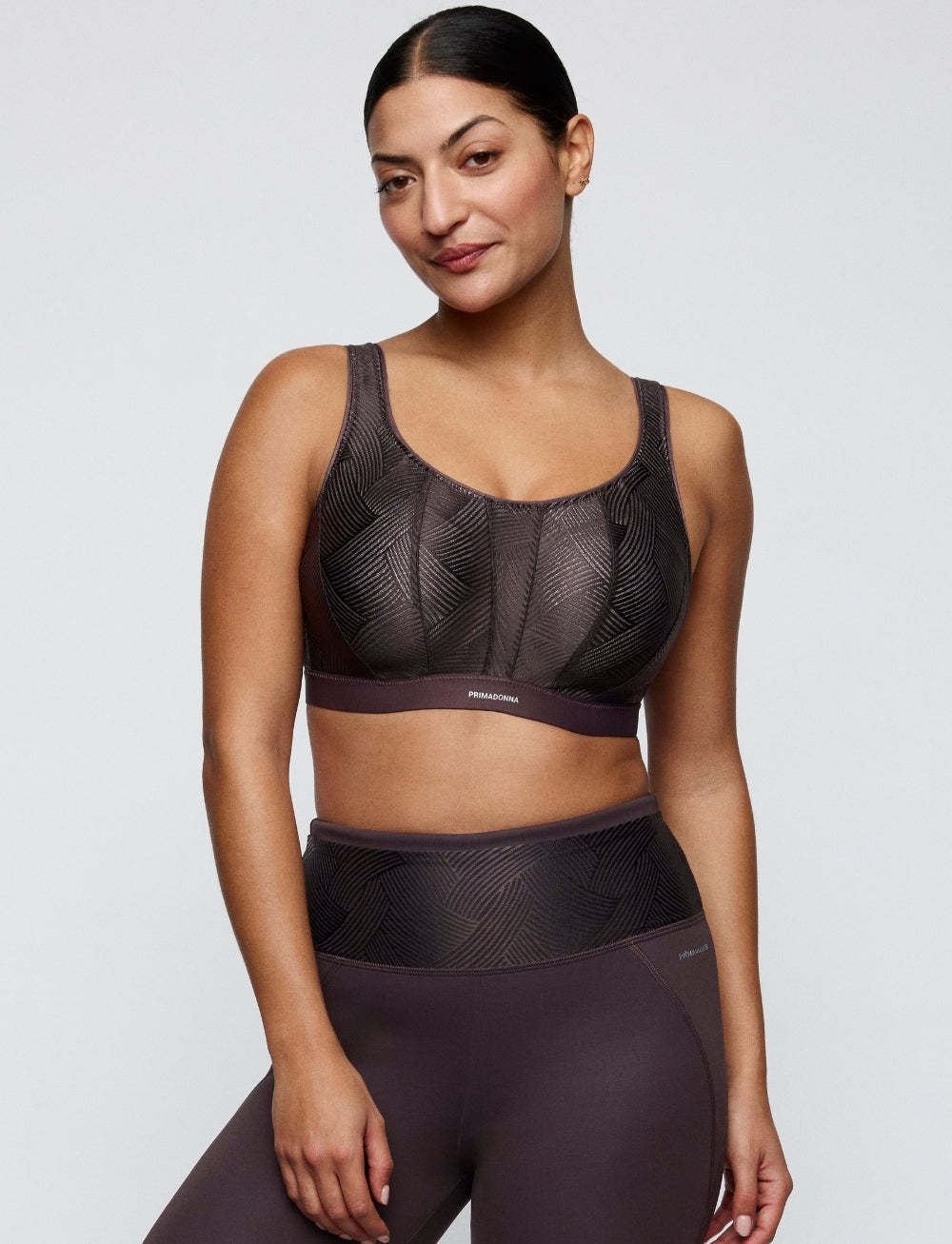
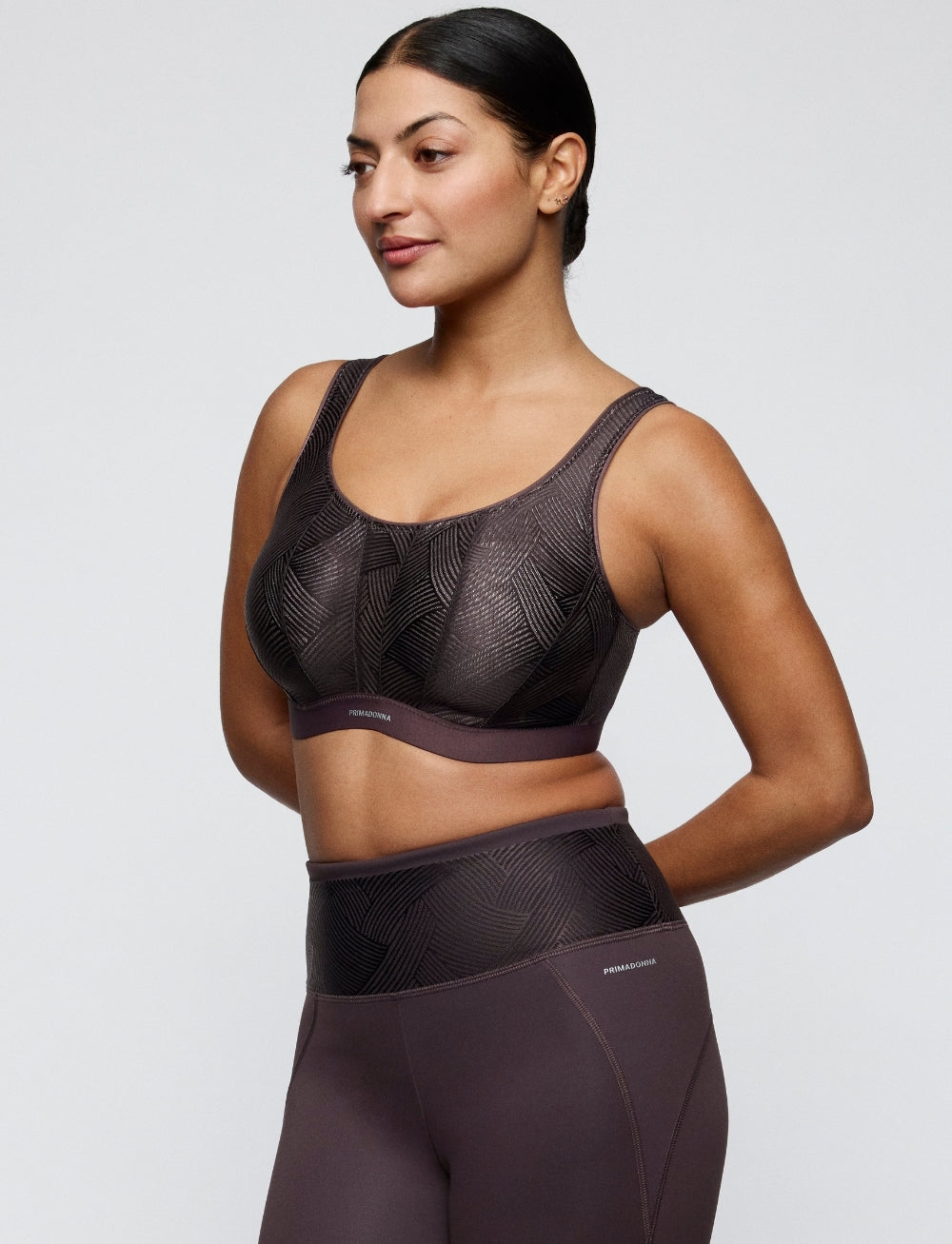
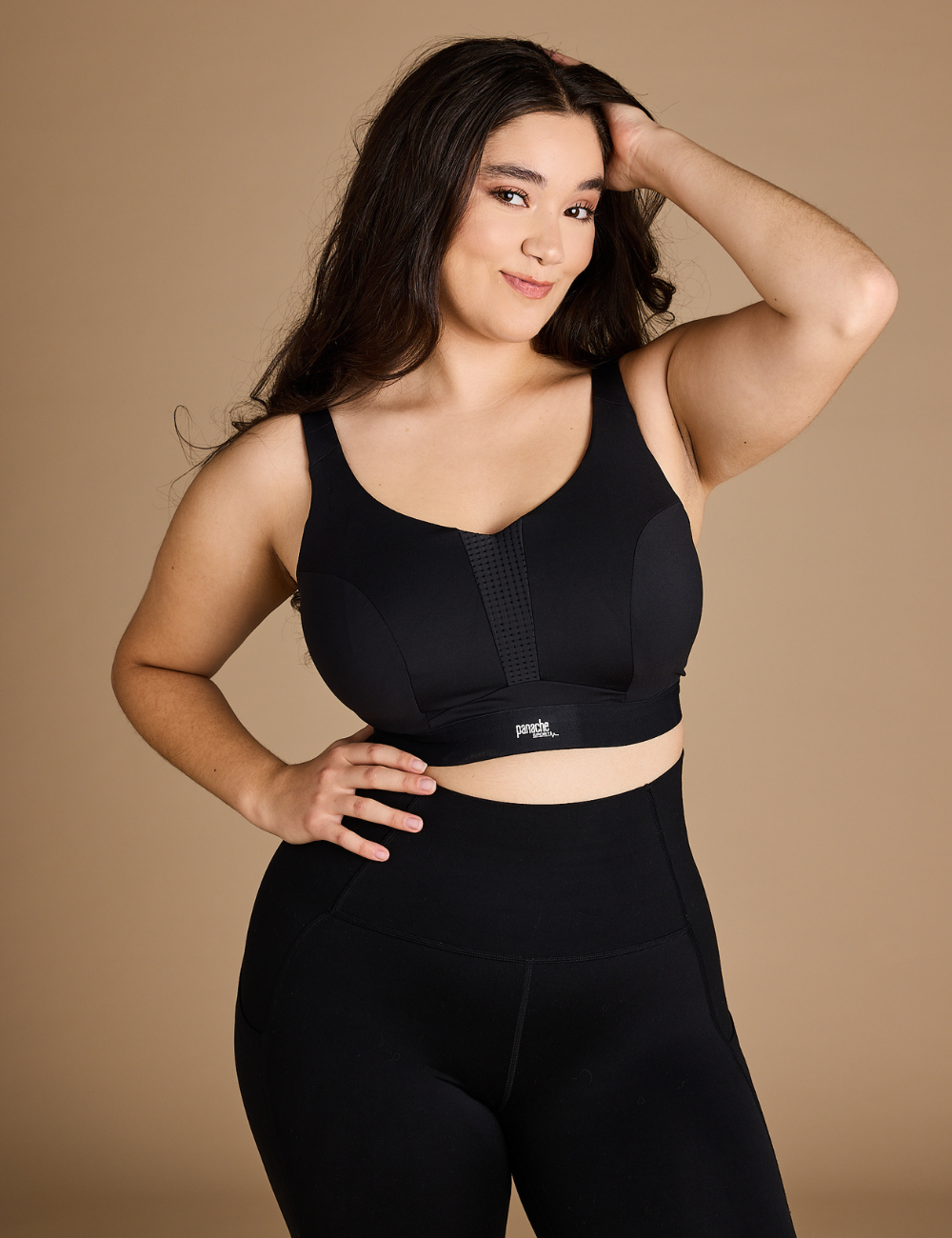
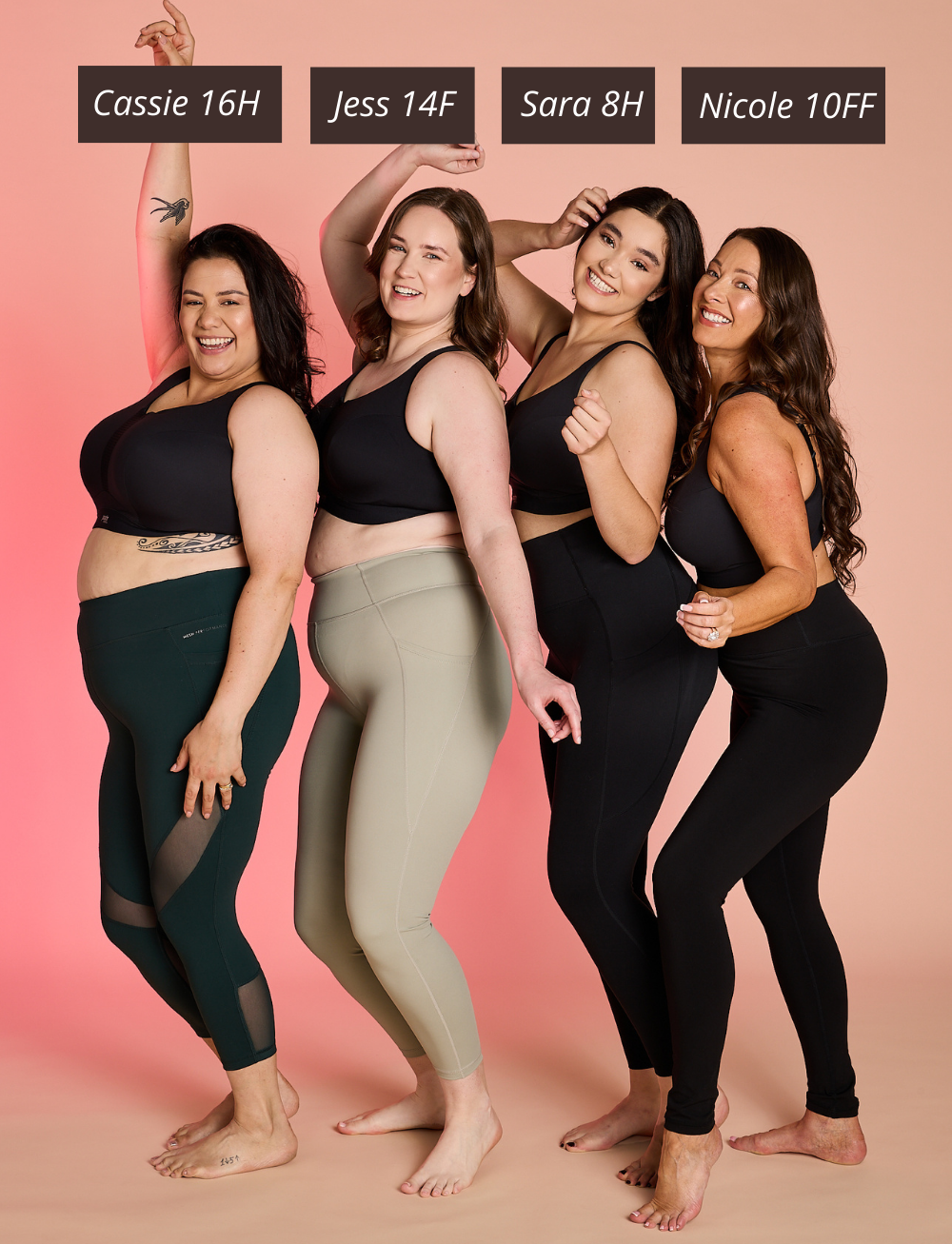
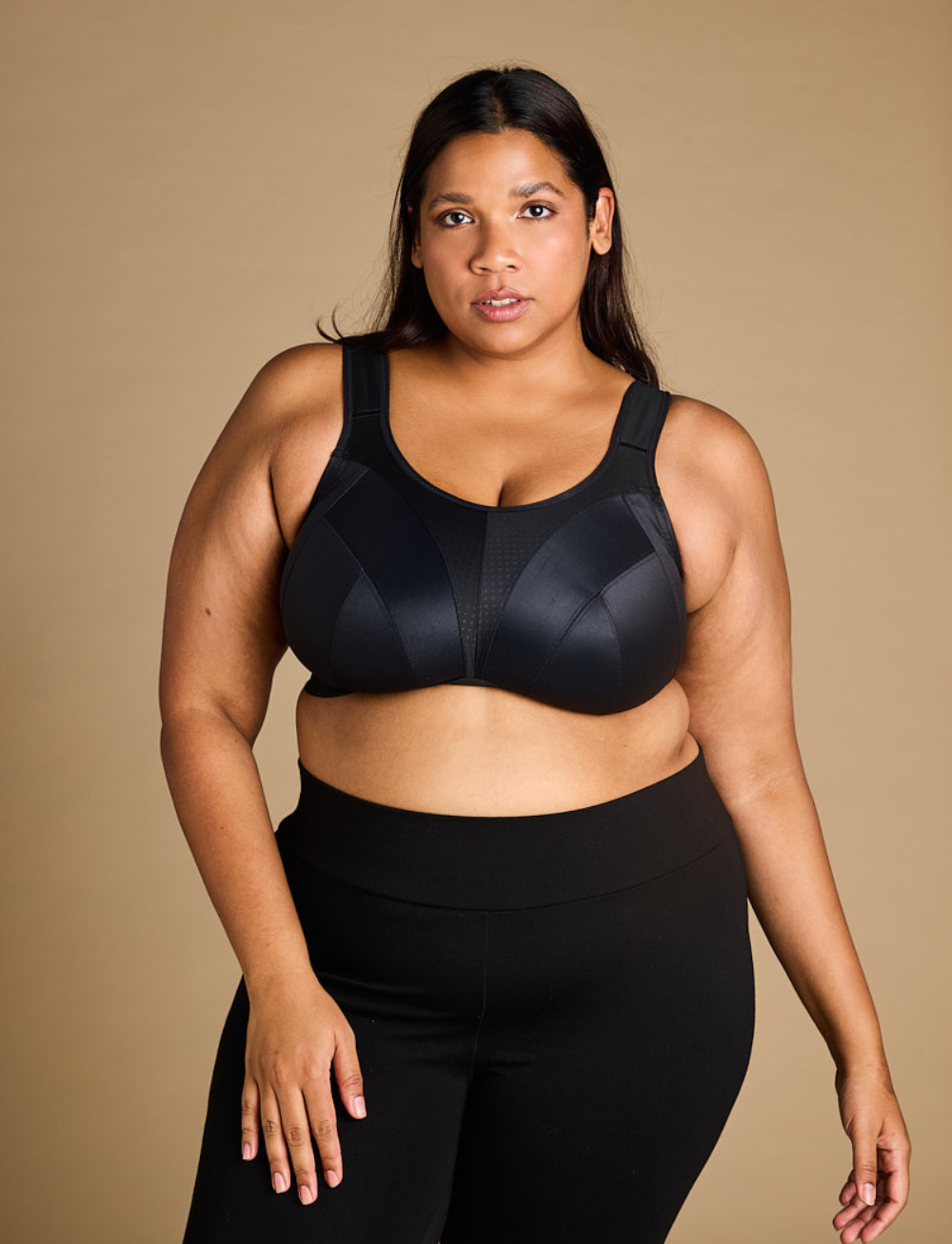
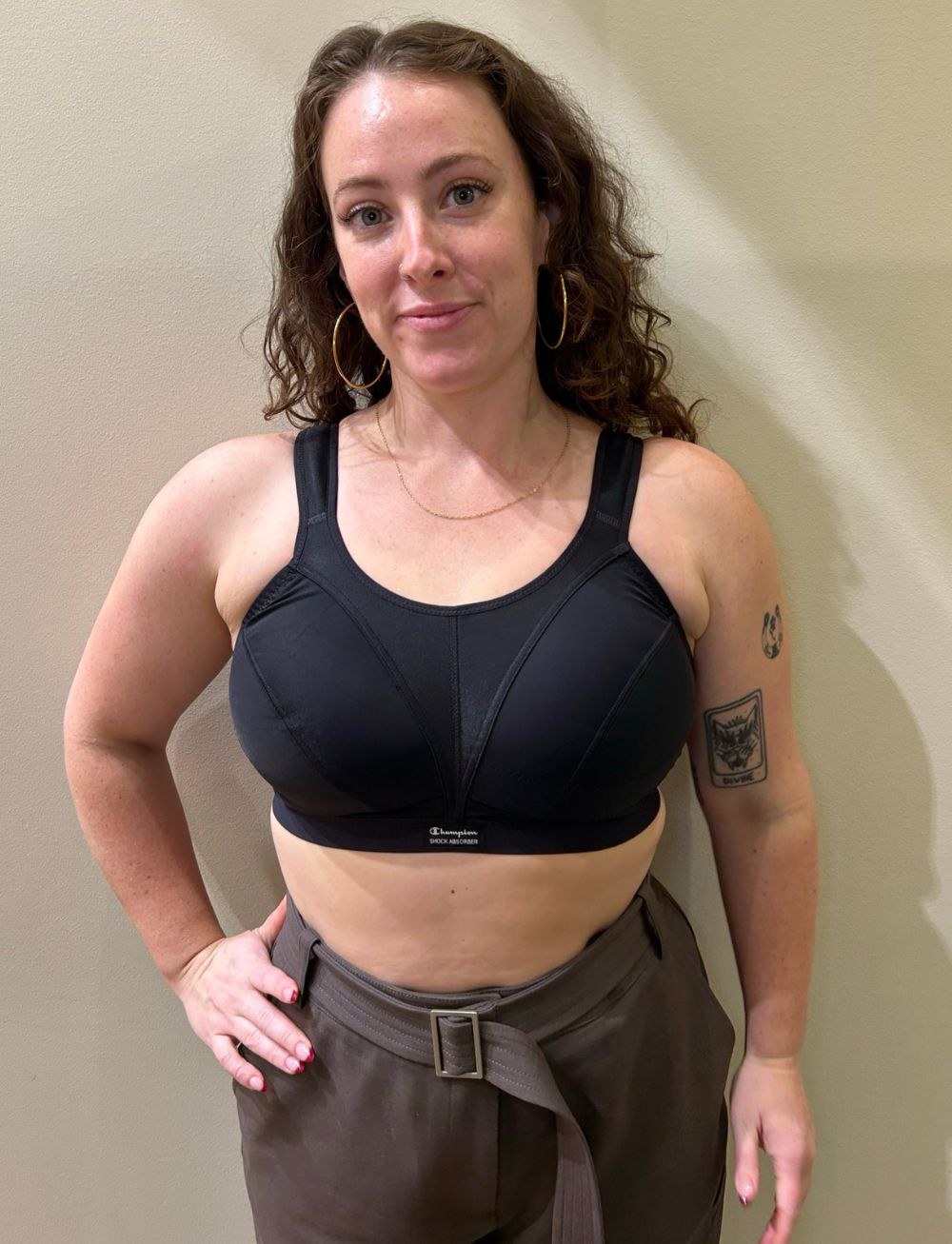
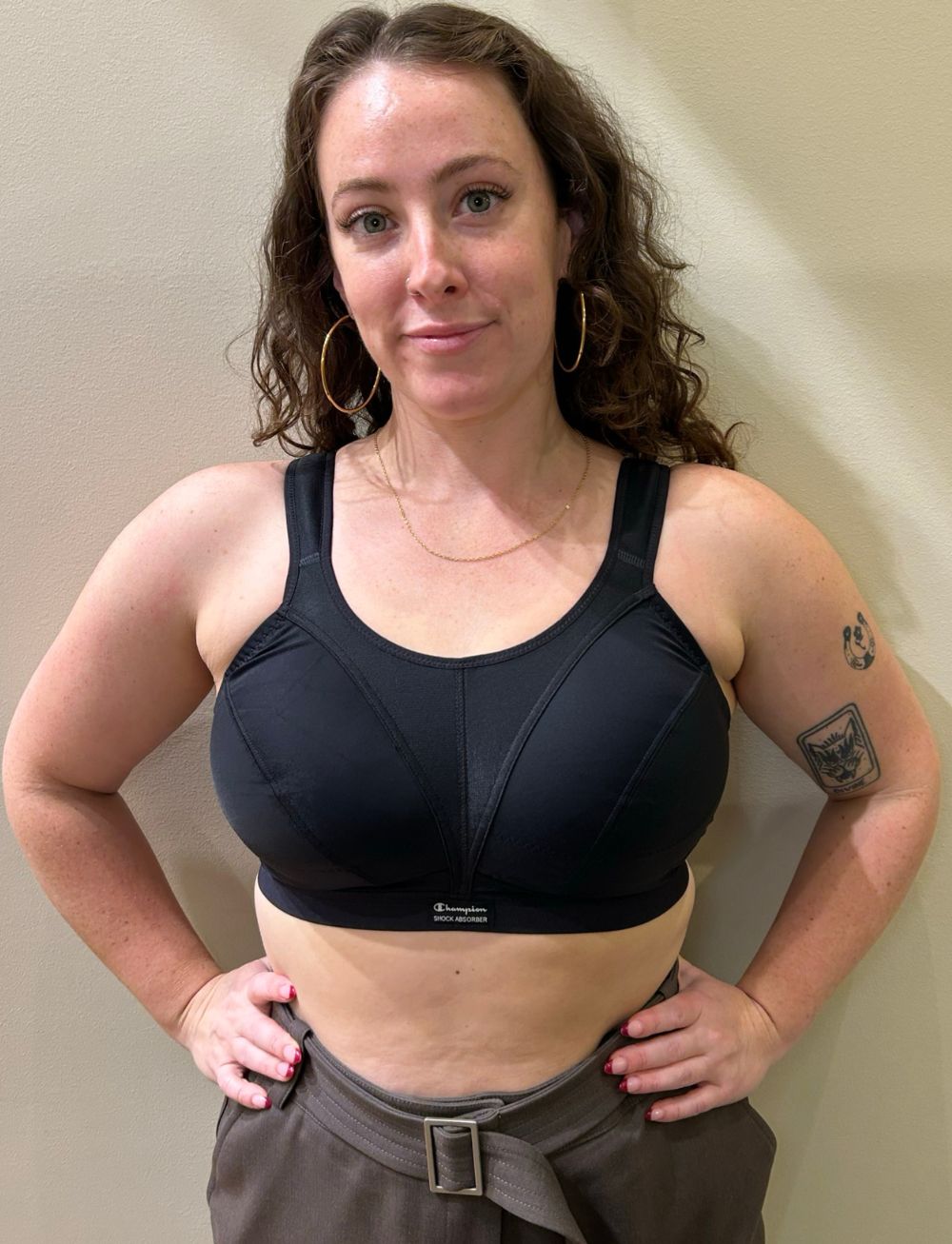
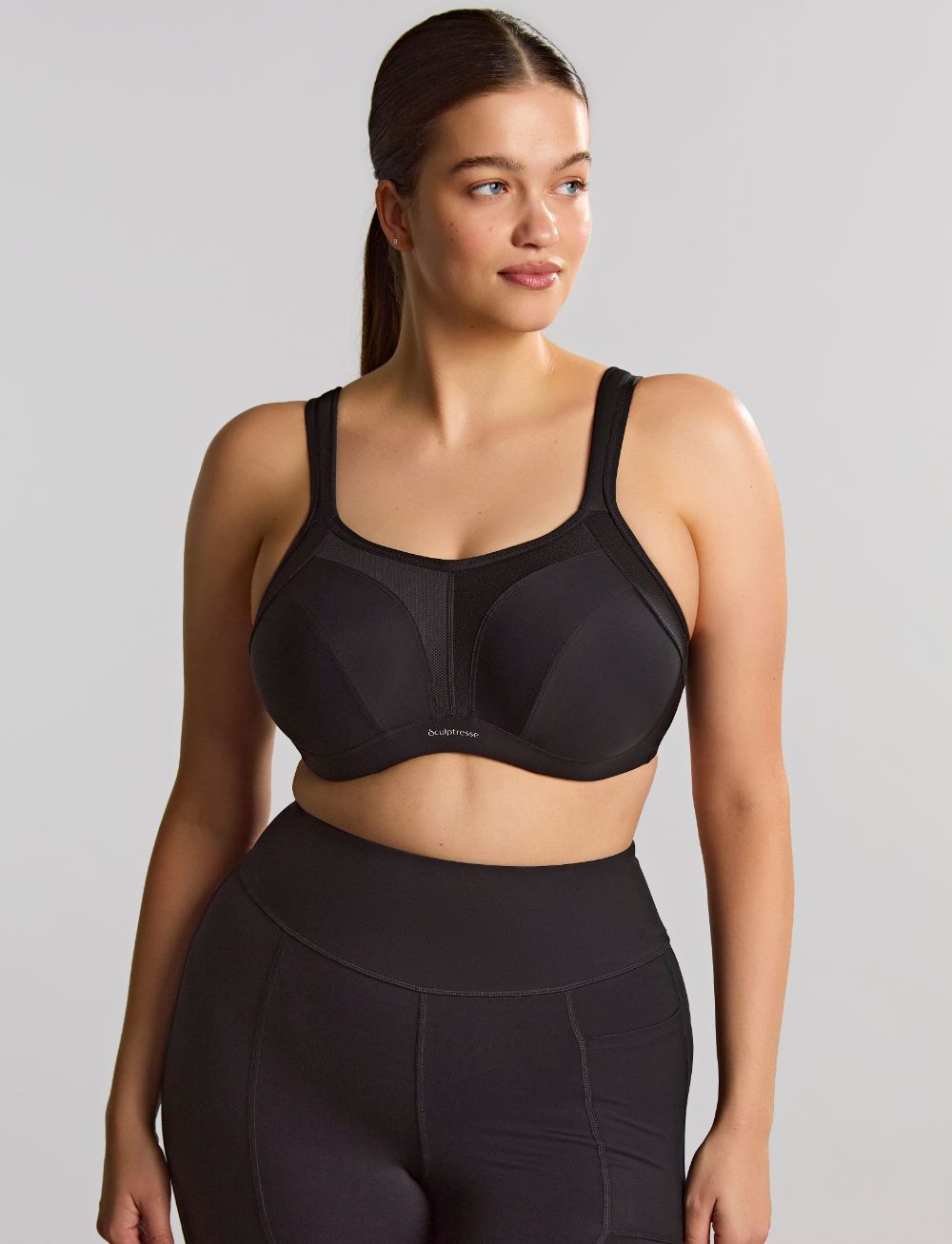
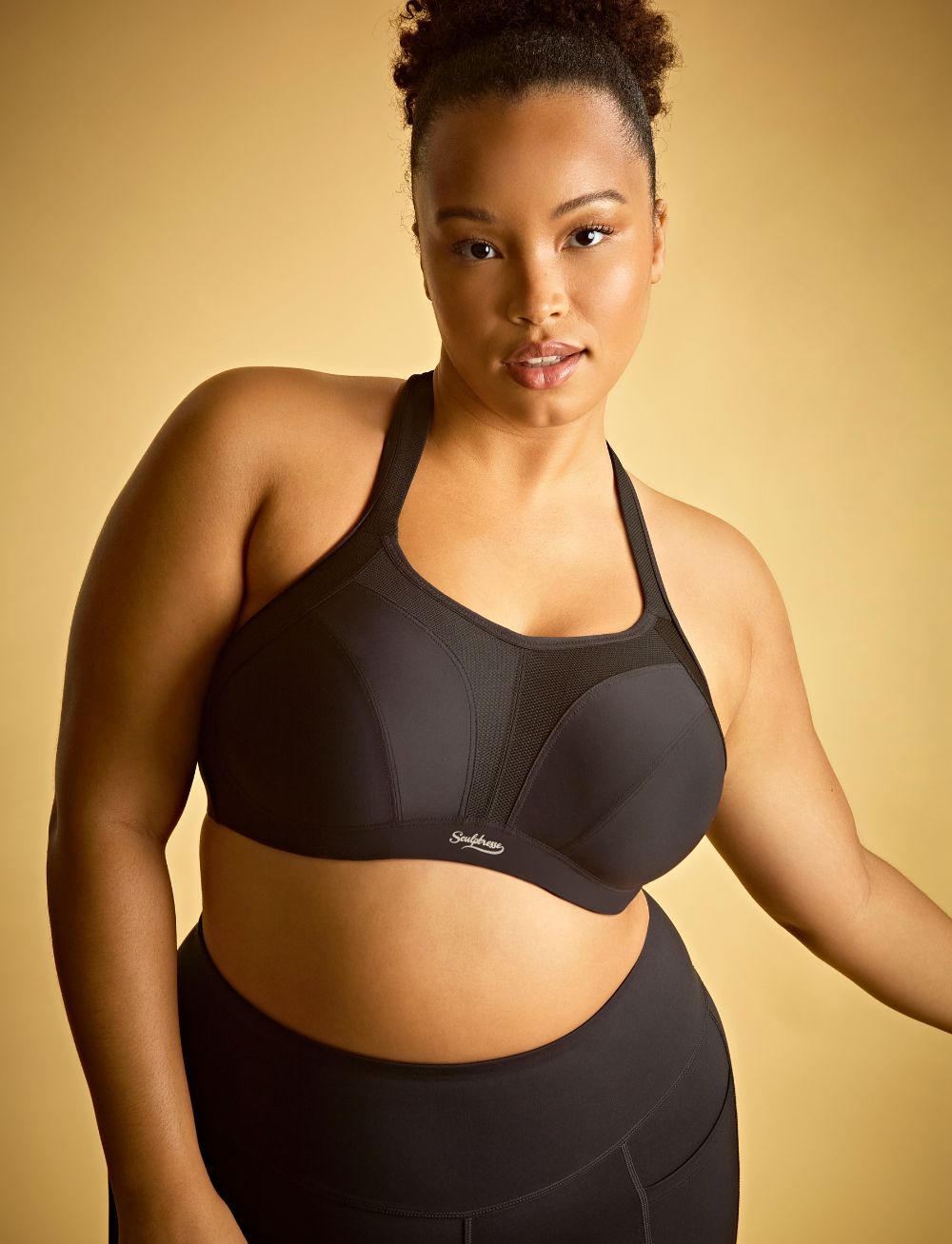
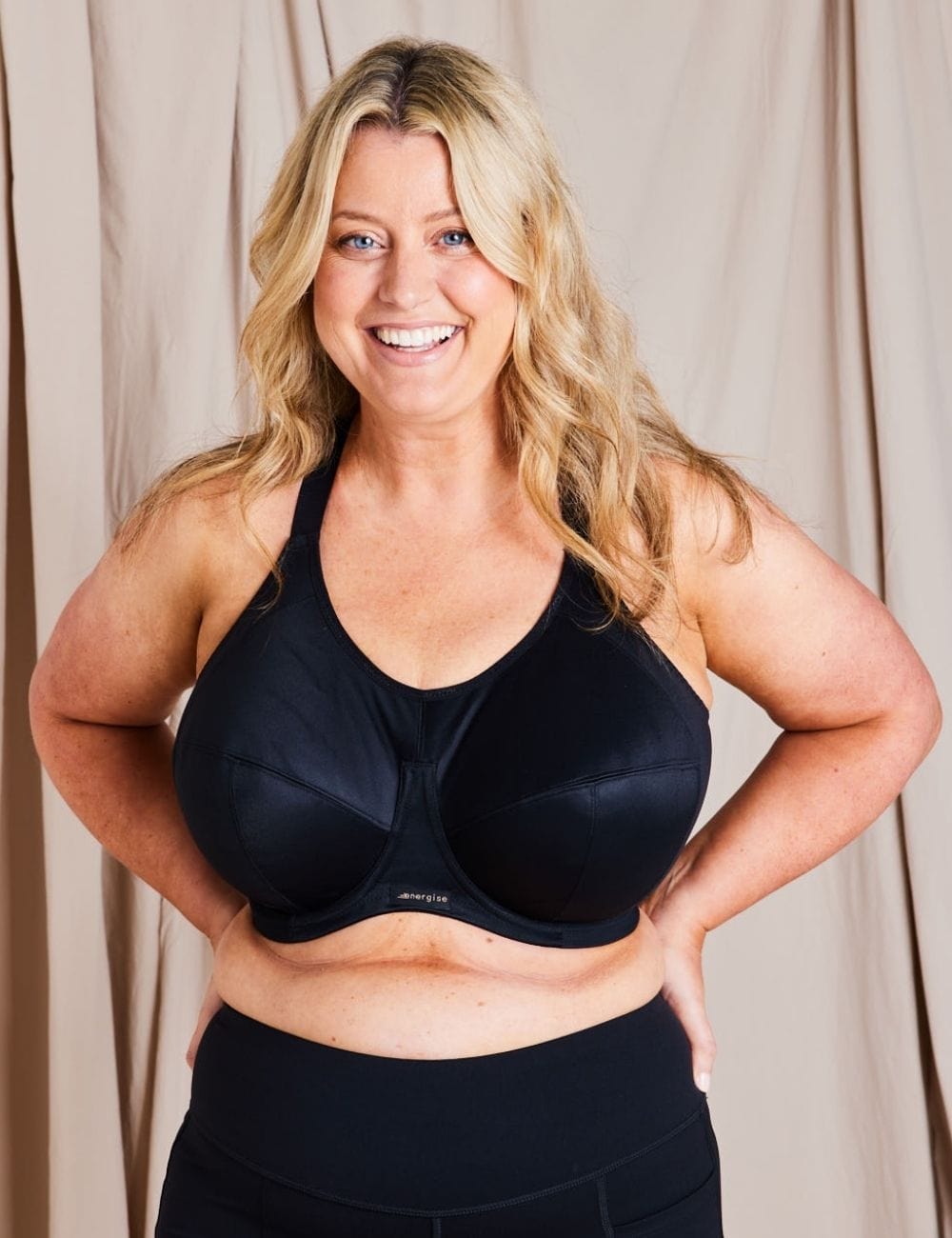
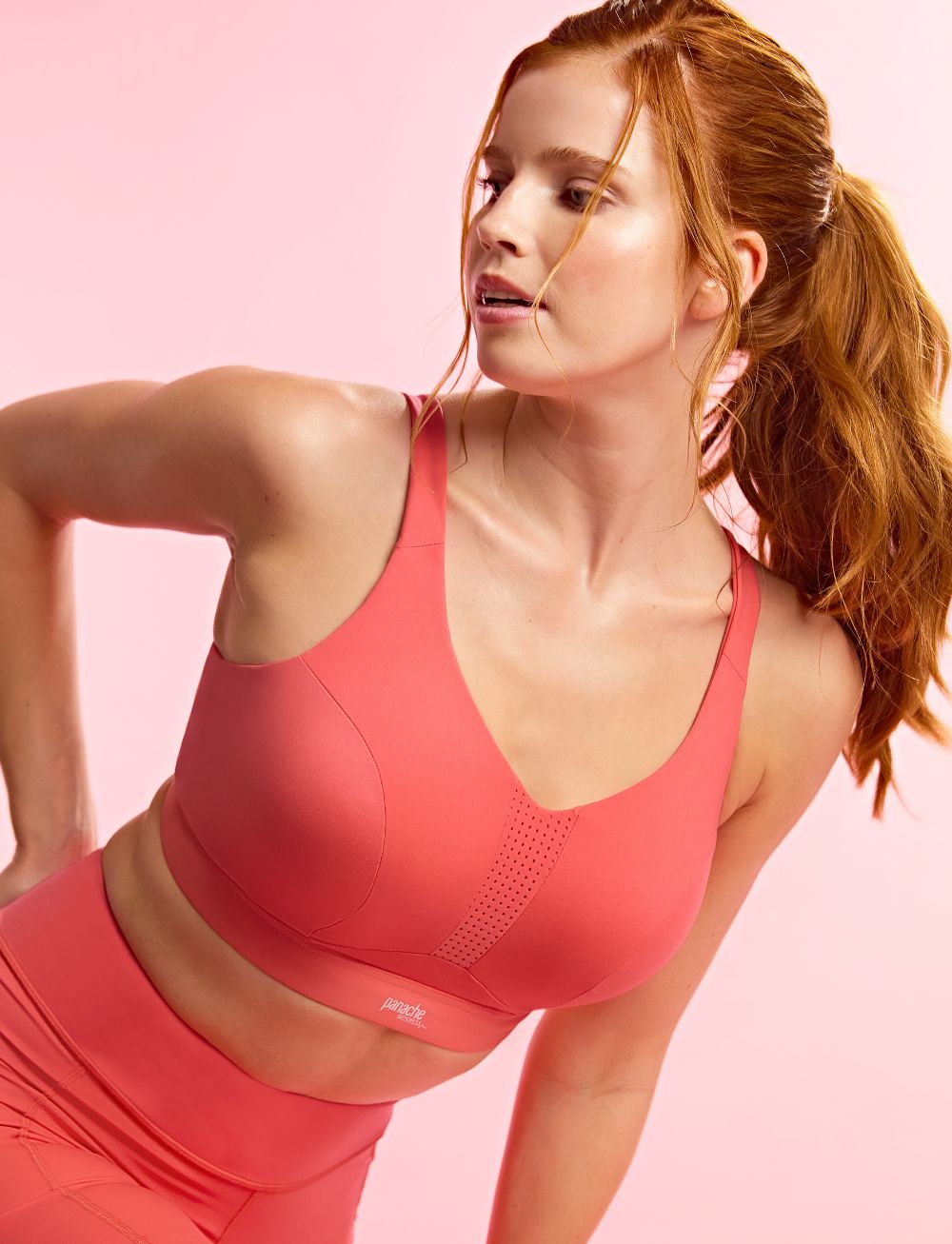
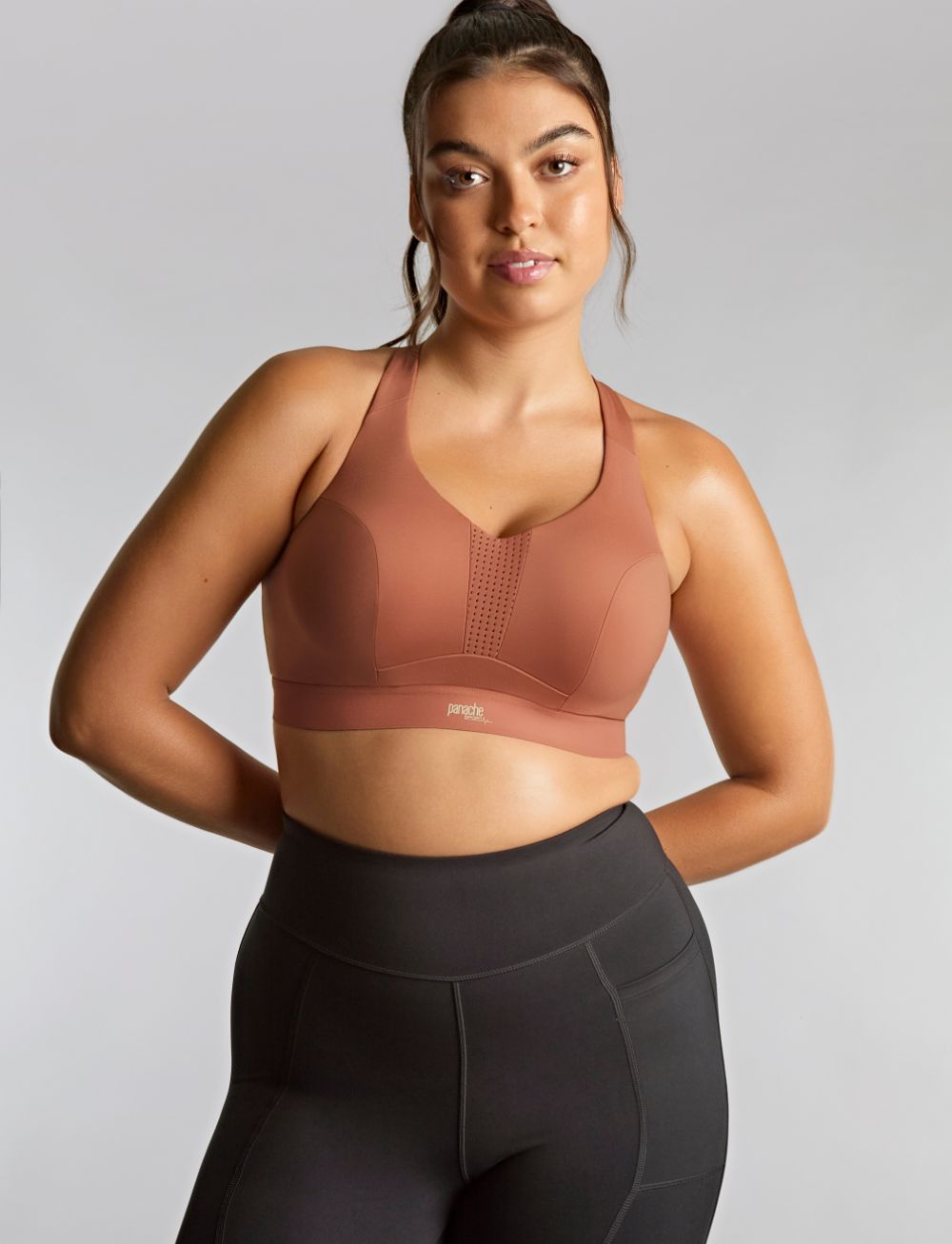
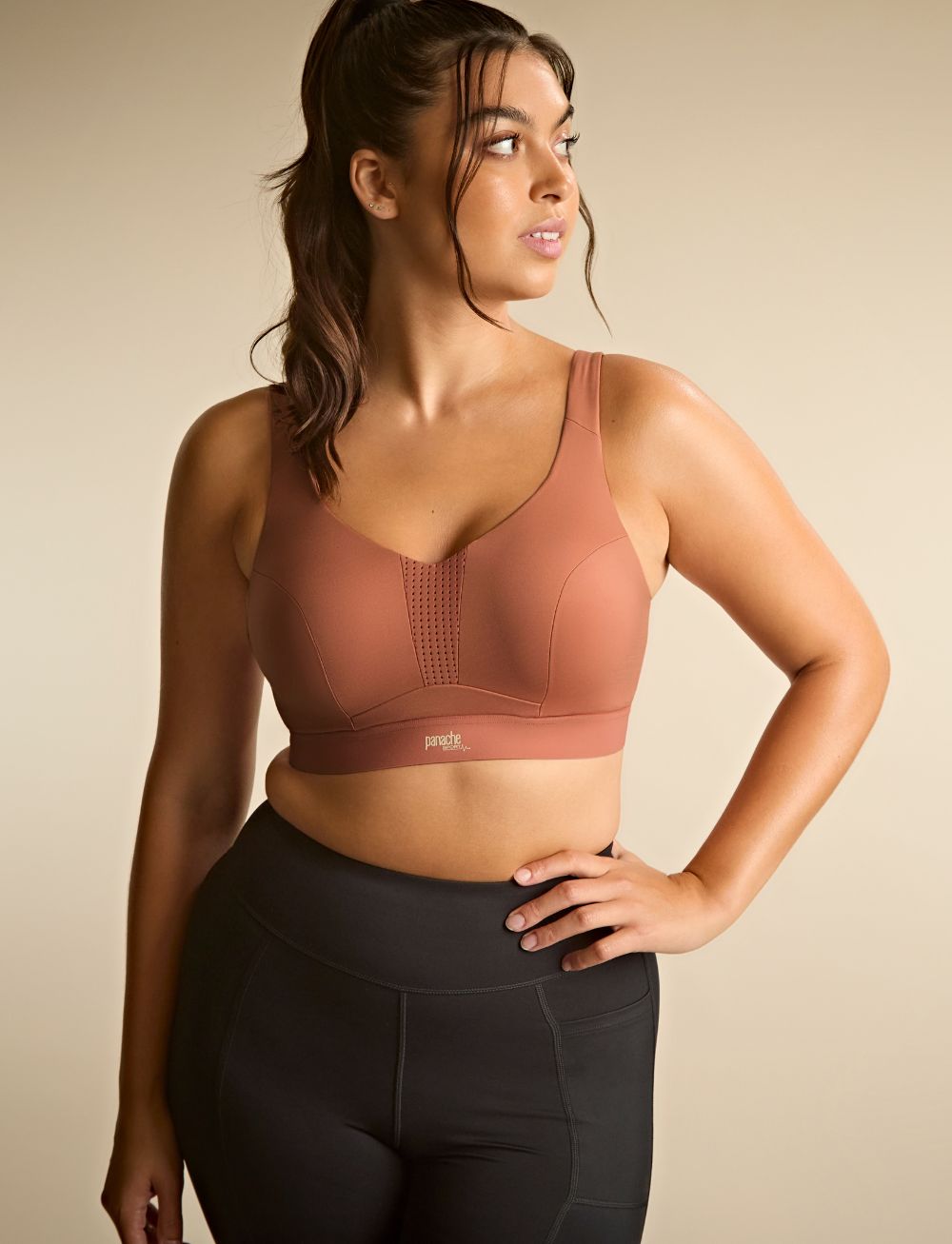
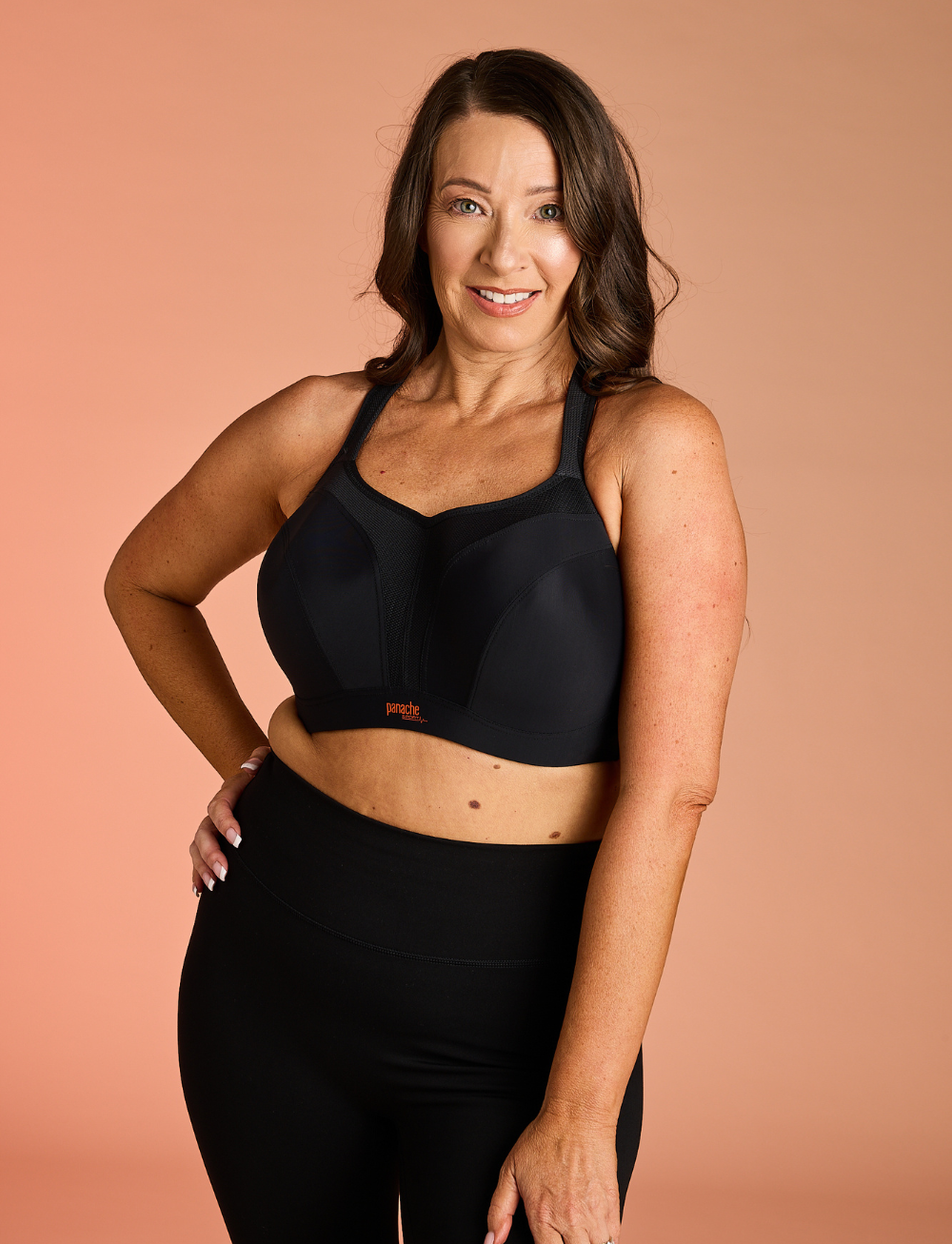
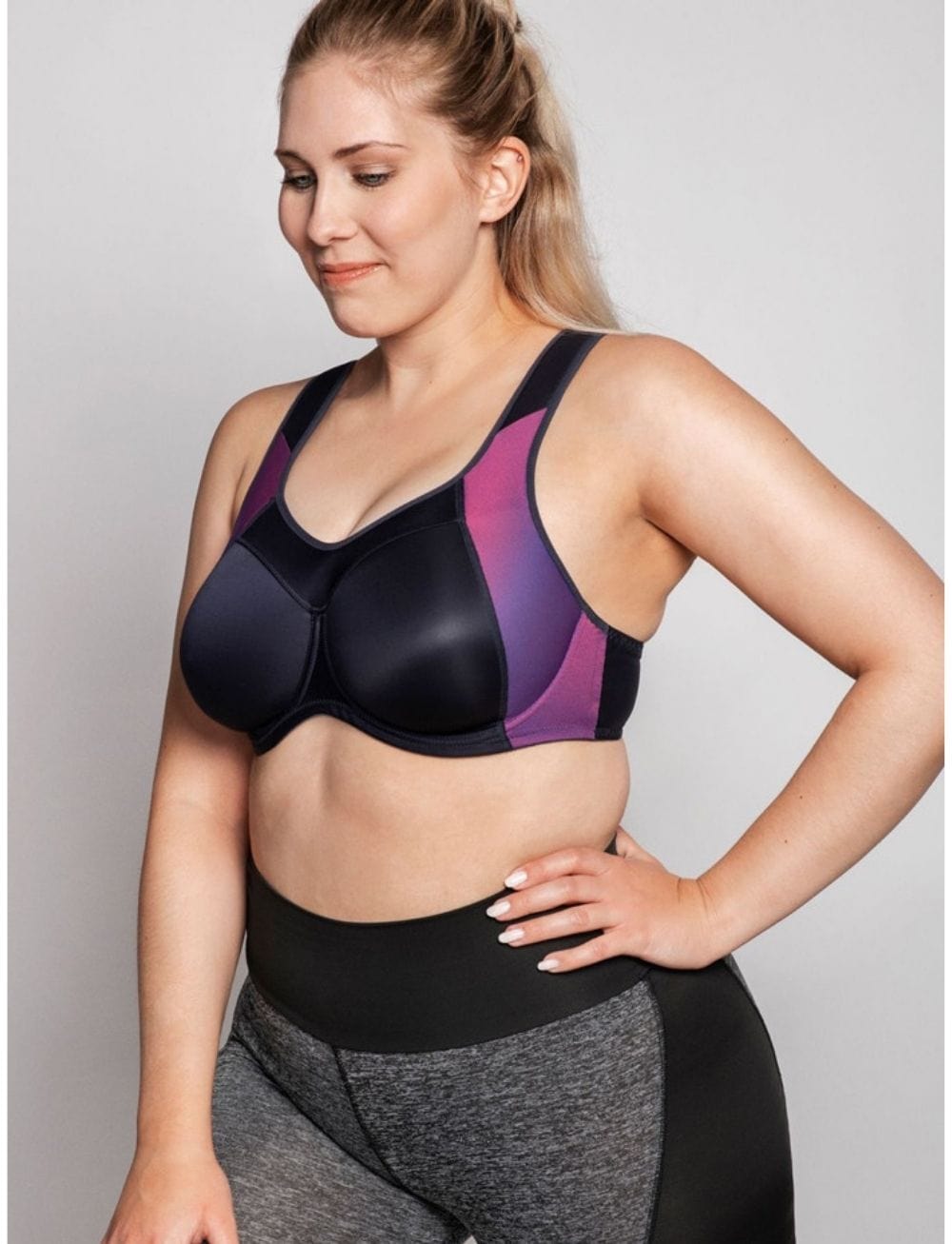
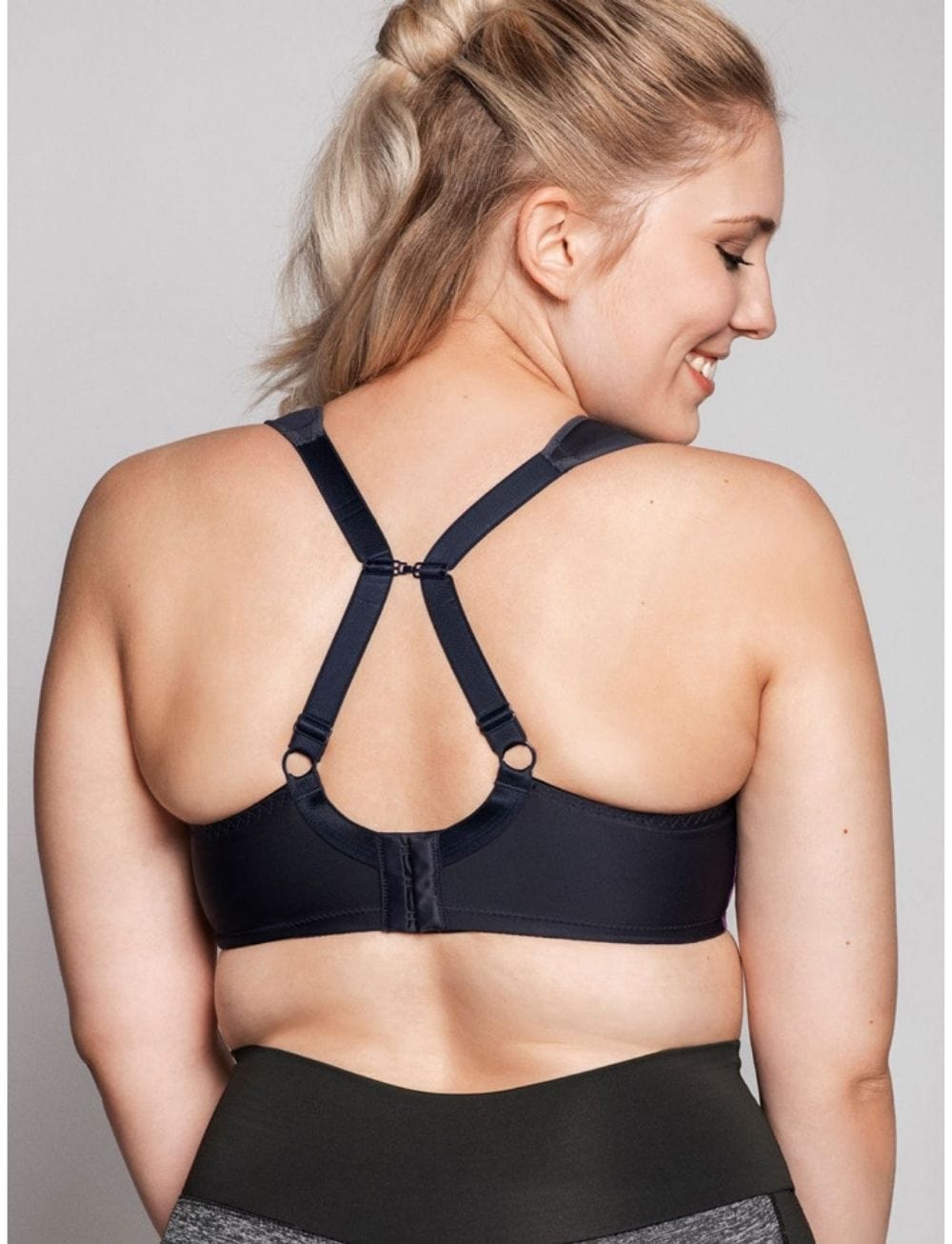
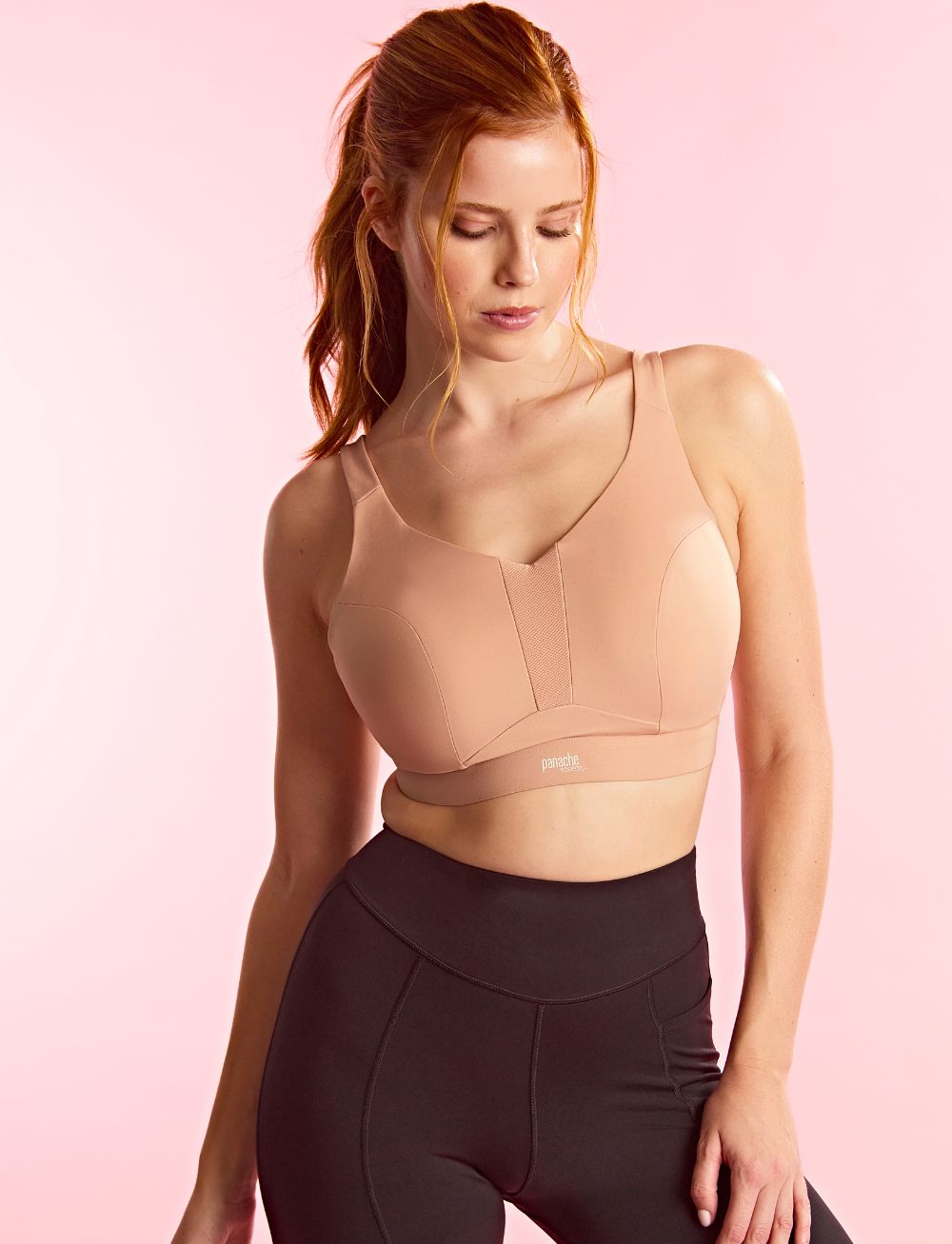
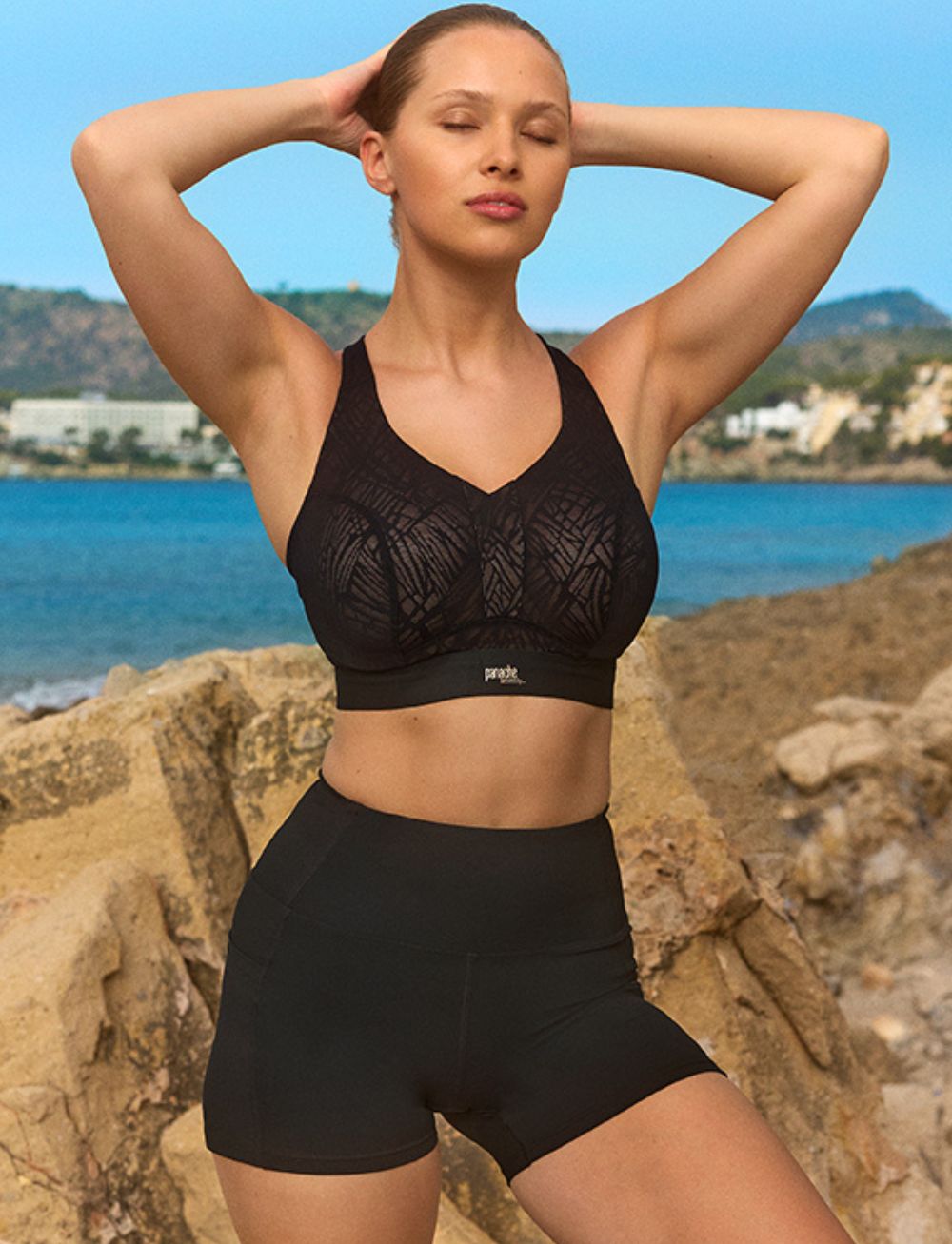
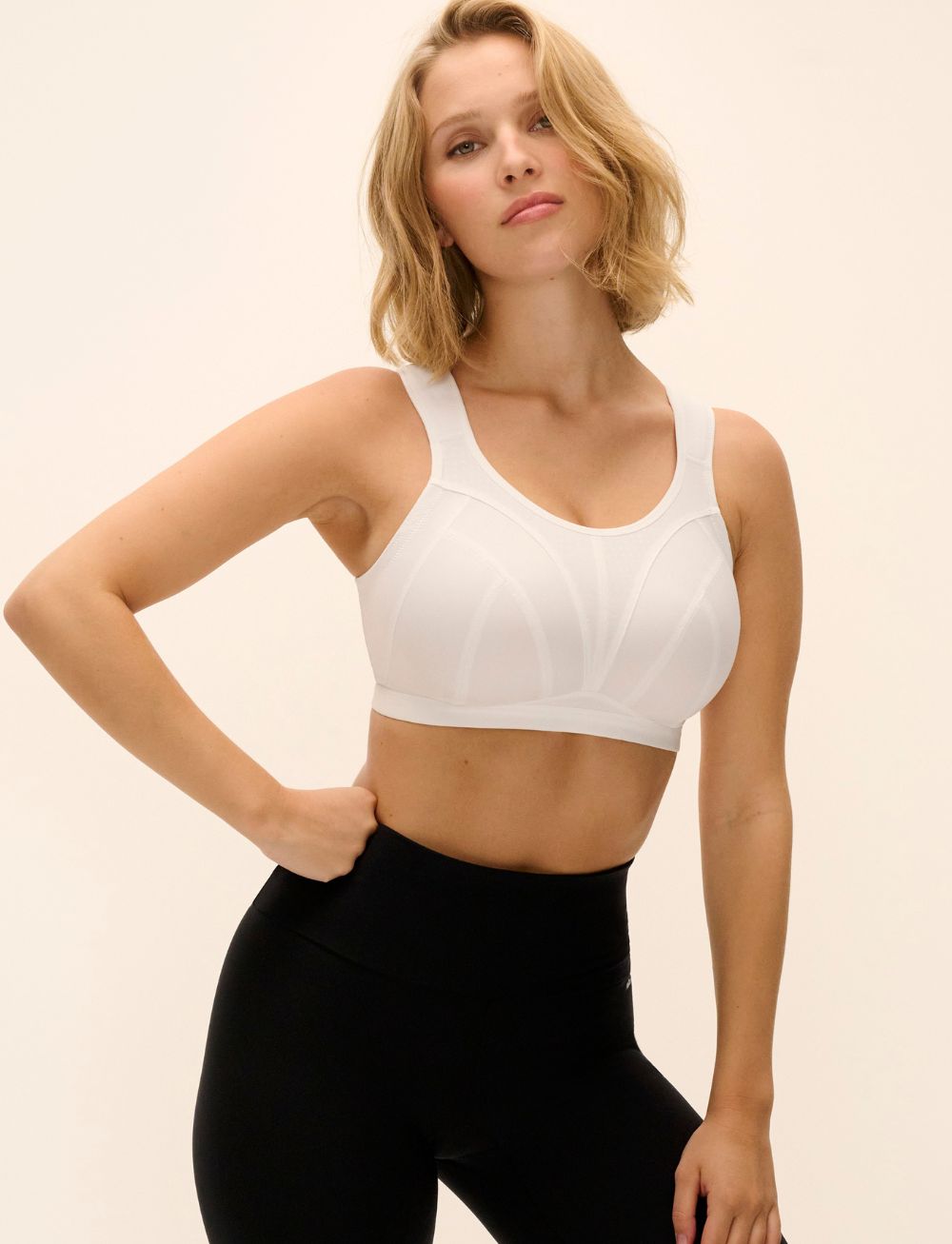
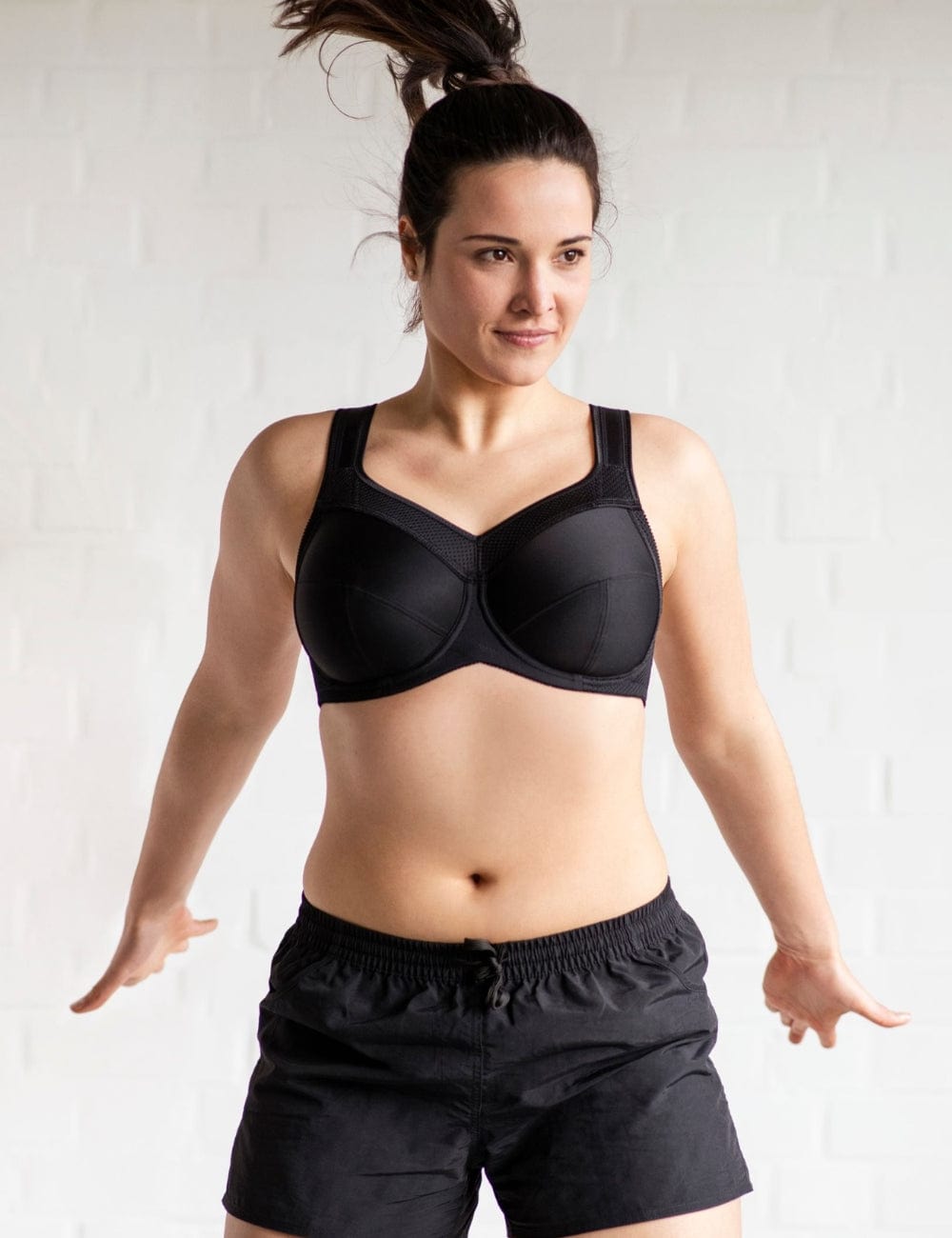
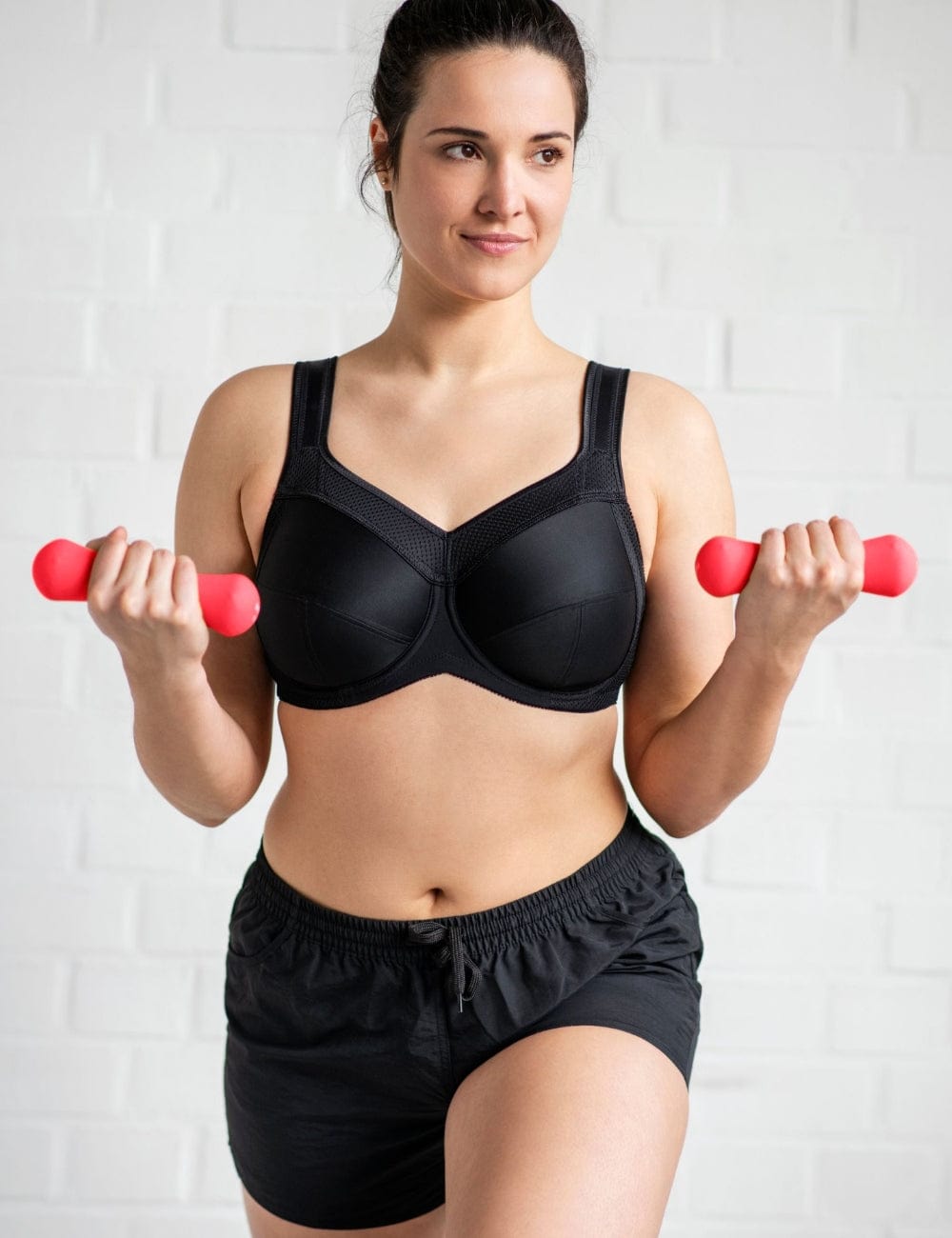
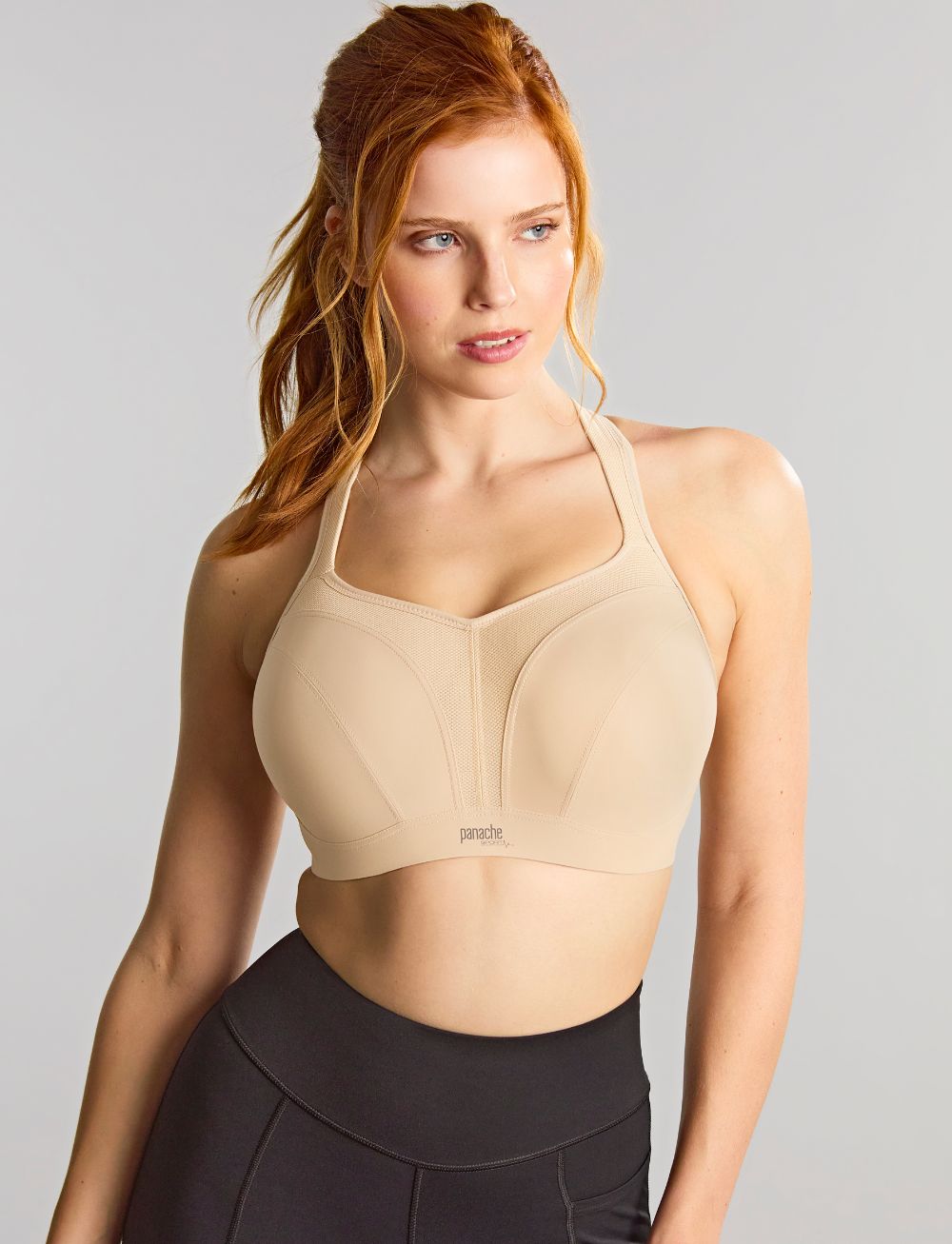
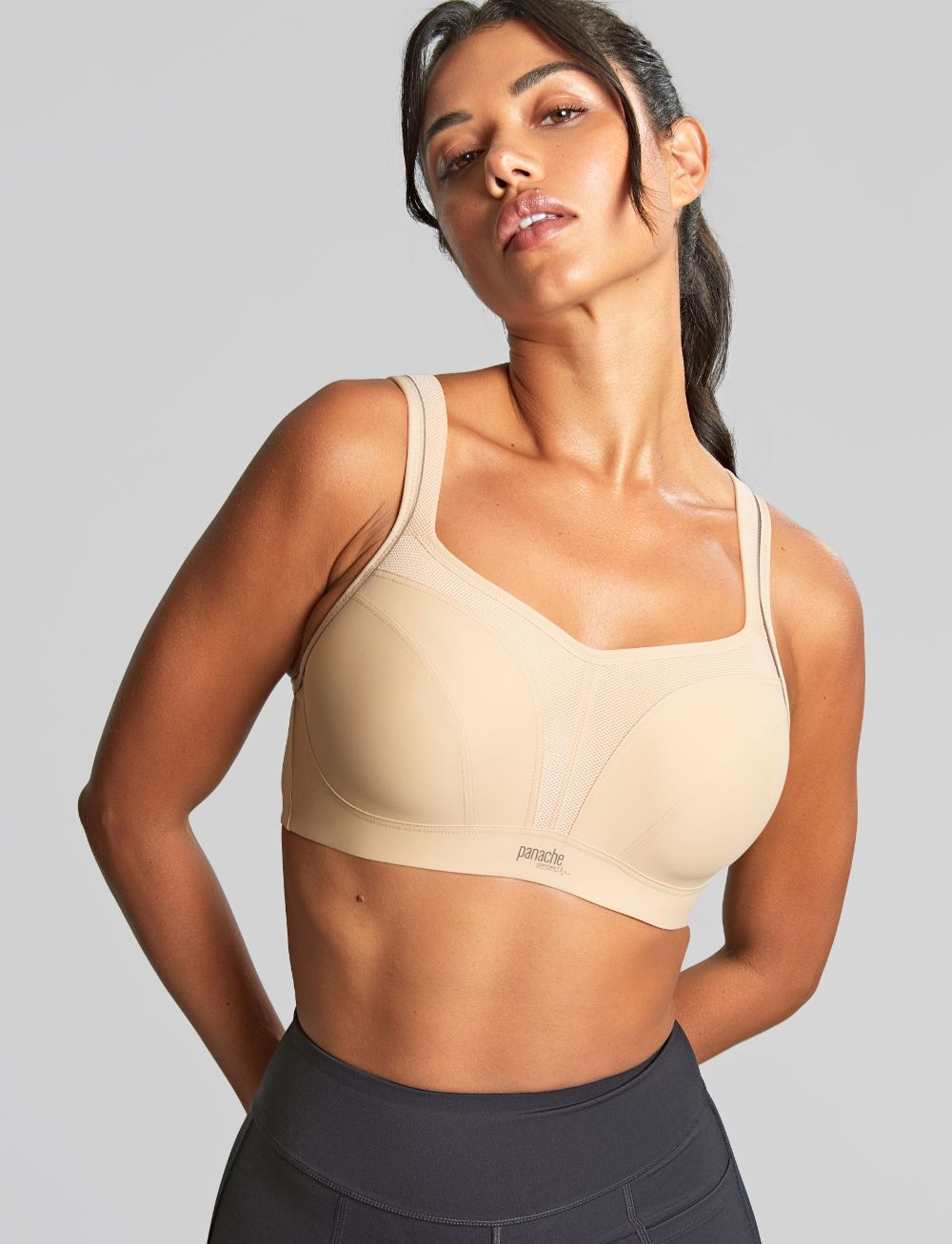
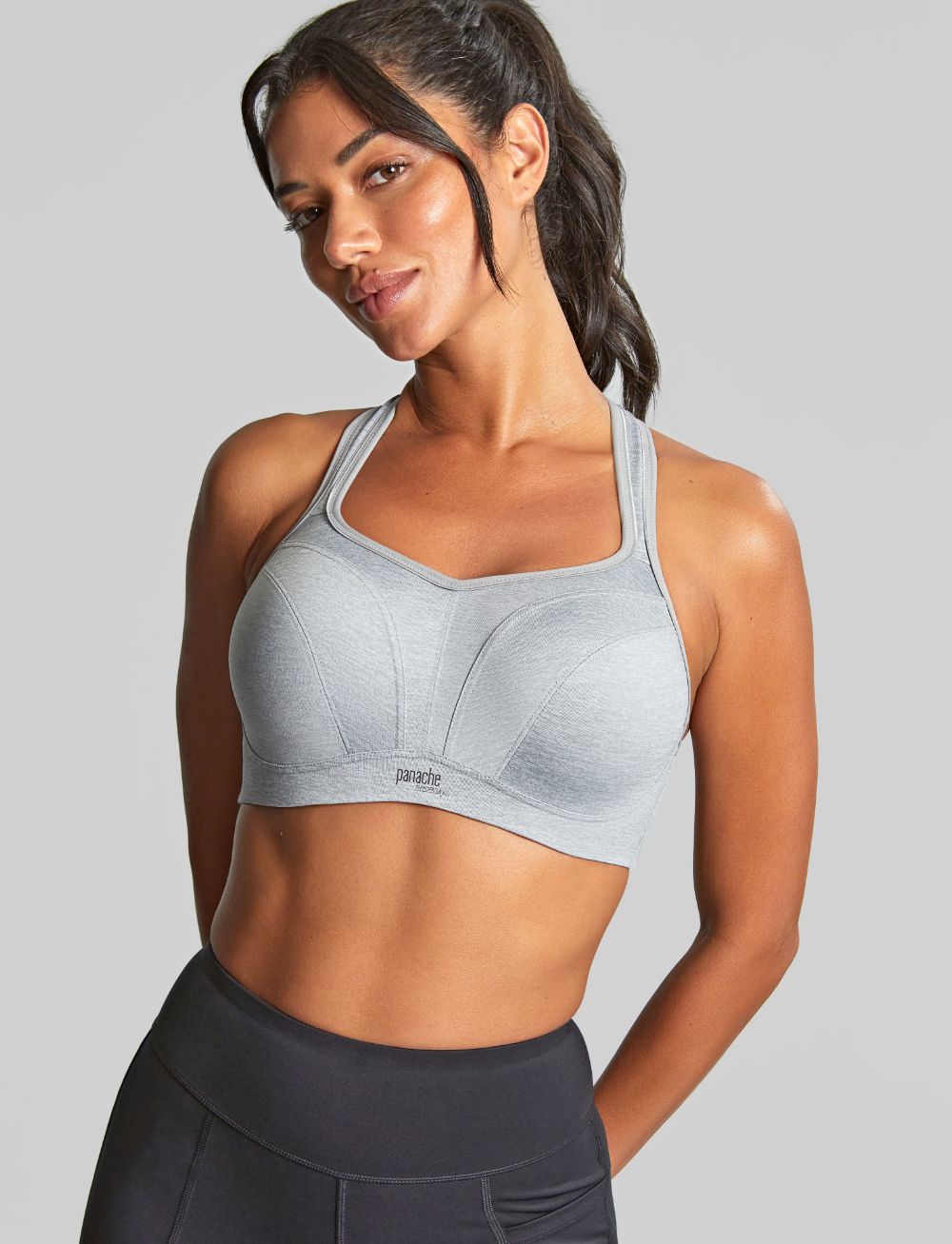
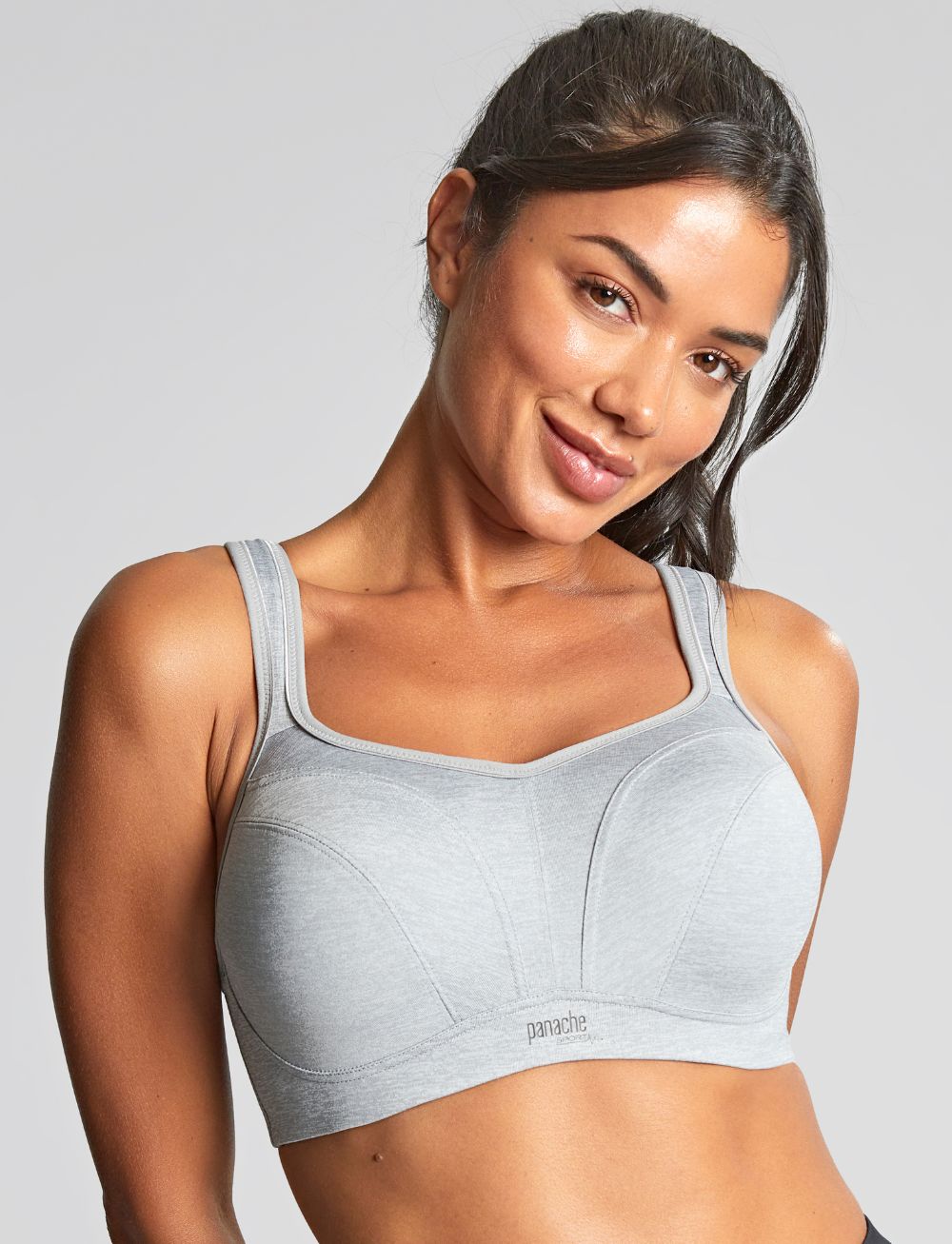
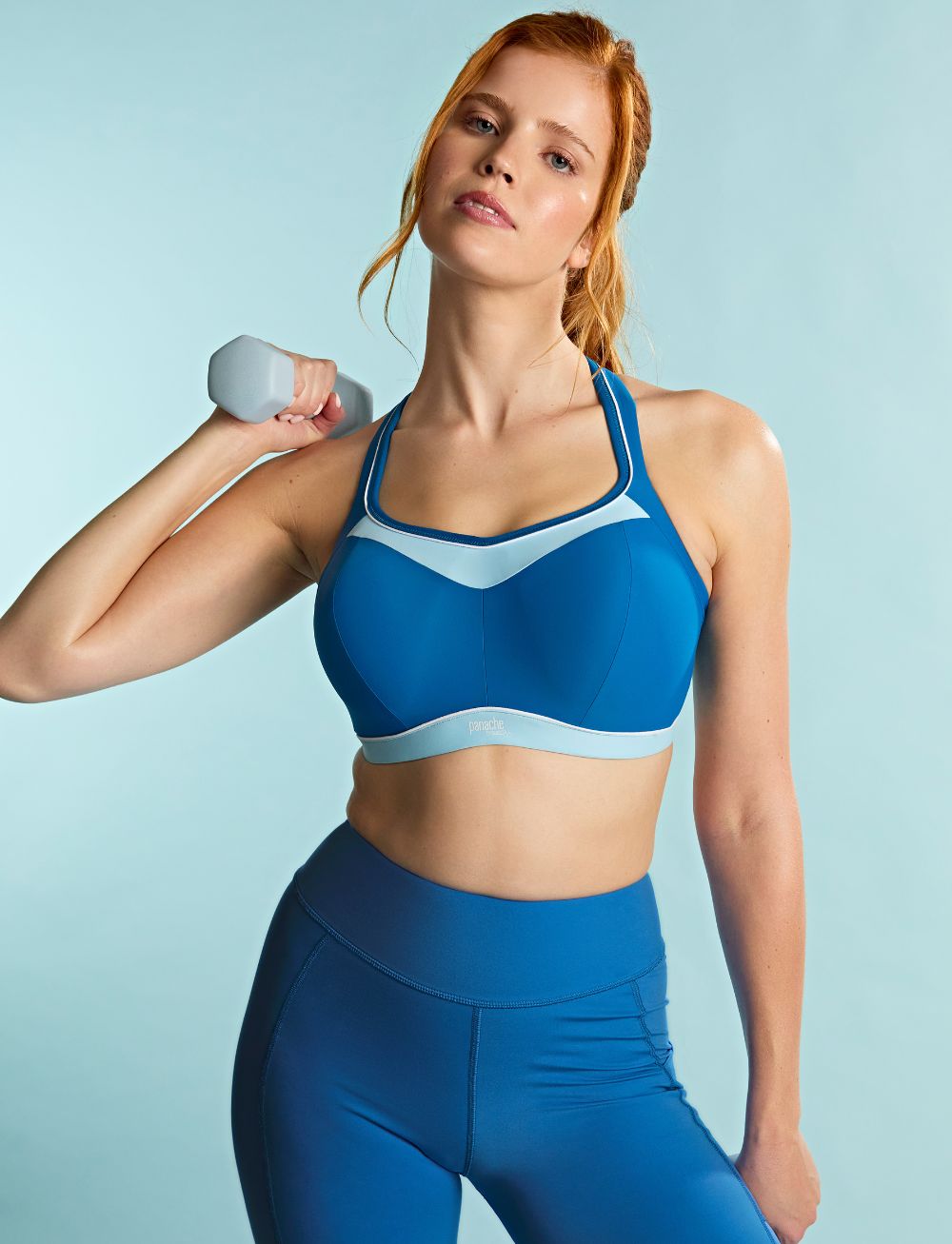
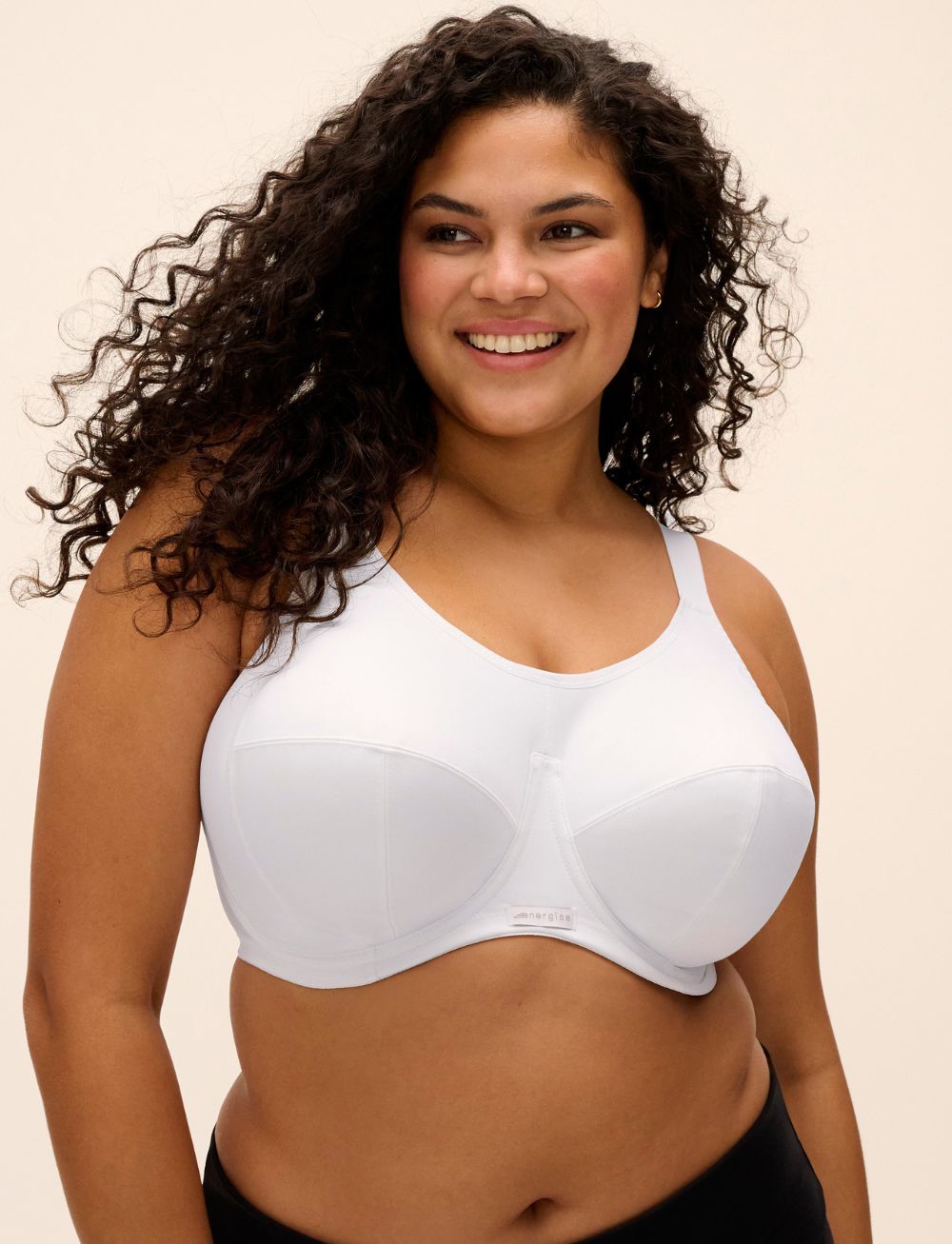
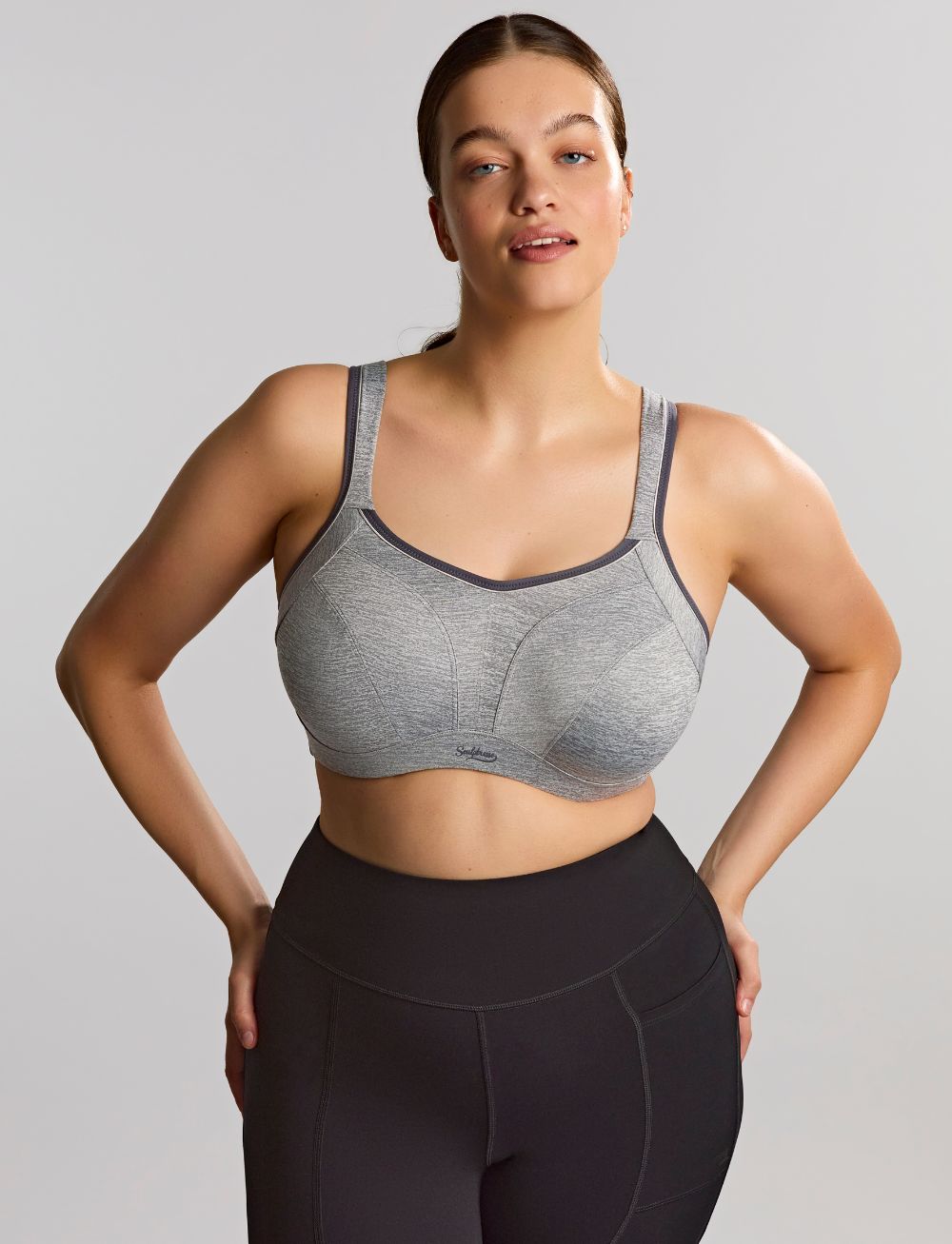
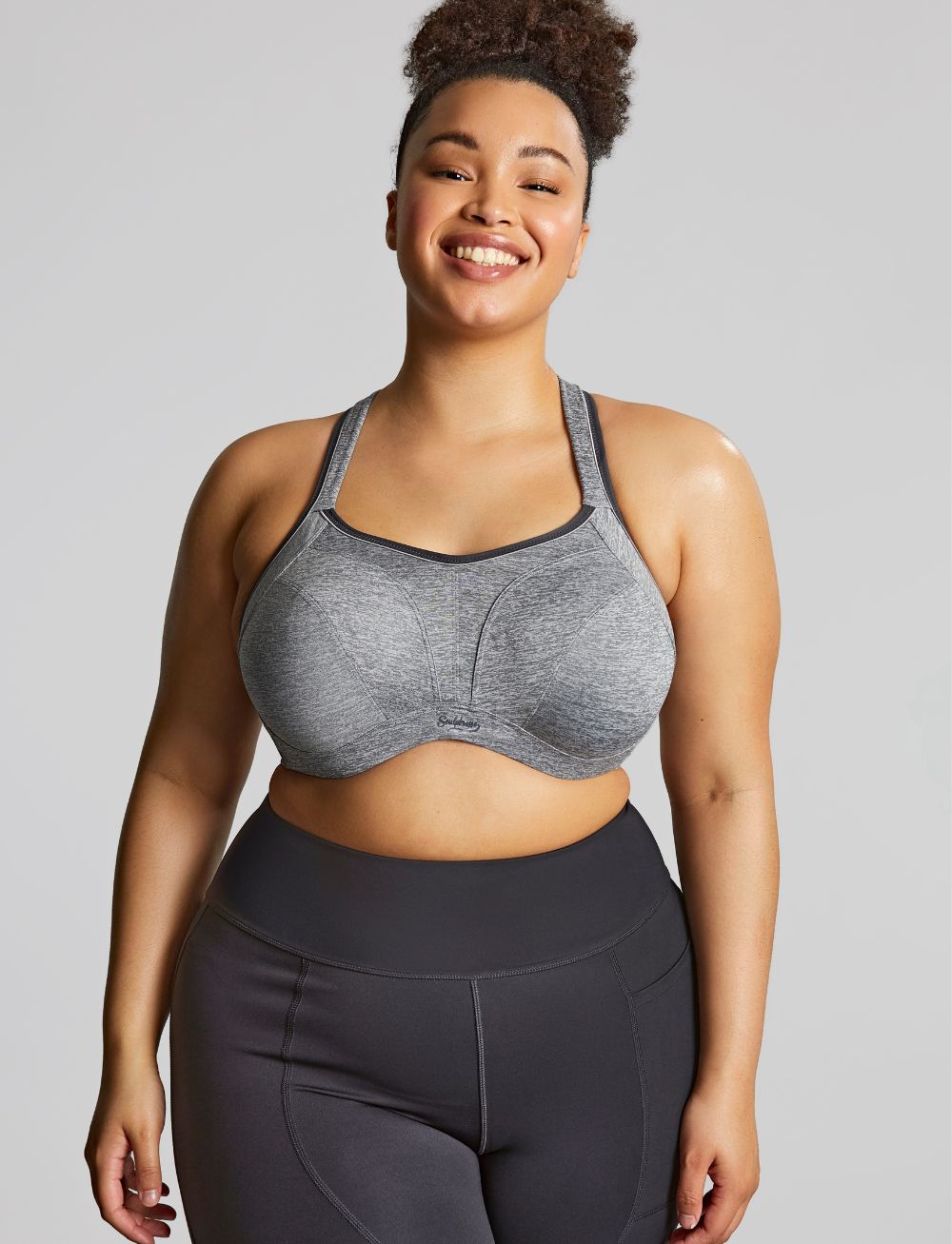
A sports bra for a larger bust needs to do something that most sports bras are not engineered for: reduce bounce at D cup and above under high-impact conditions, while remaining comfortable enough to wear for the full duration of a workout. The difference between a sports bra that achieves this and one that doesn't is construction — specifically, encapsulation versus compression.
Encapsulation vs compression: why it matters
Compression sports bras flatten the bust against the chest. This reduces movement, but creates pressure, heat, and discomfort at larger cup sizes, and provides less lift at rest. Encapsulation sports bras support each breast independently in a formed cup — like a structured bra with sports-specific construction. At D cup and above, encapsulation gives significantly better bounce reduction, better shape, and far more comfort over the length of a workout. Some sports bras combine both, encapsulation cups with an outer compression layer, which can be very effective at larger cup sizes.
Choosing by activity level
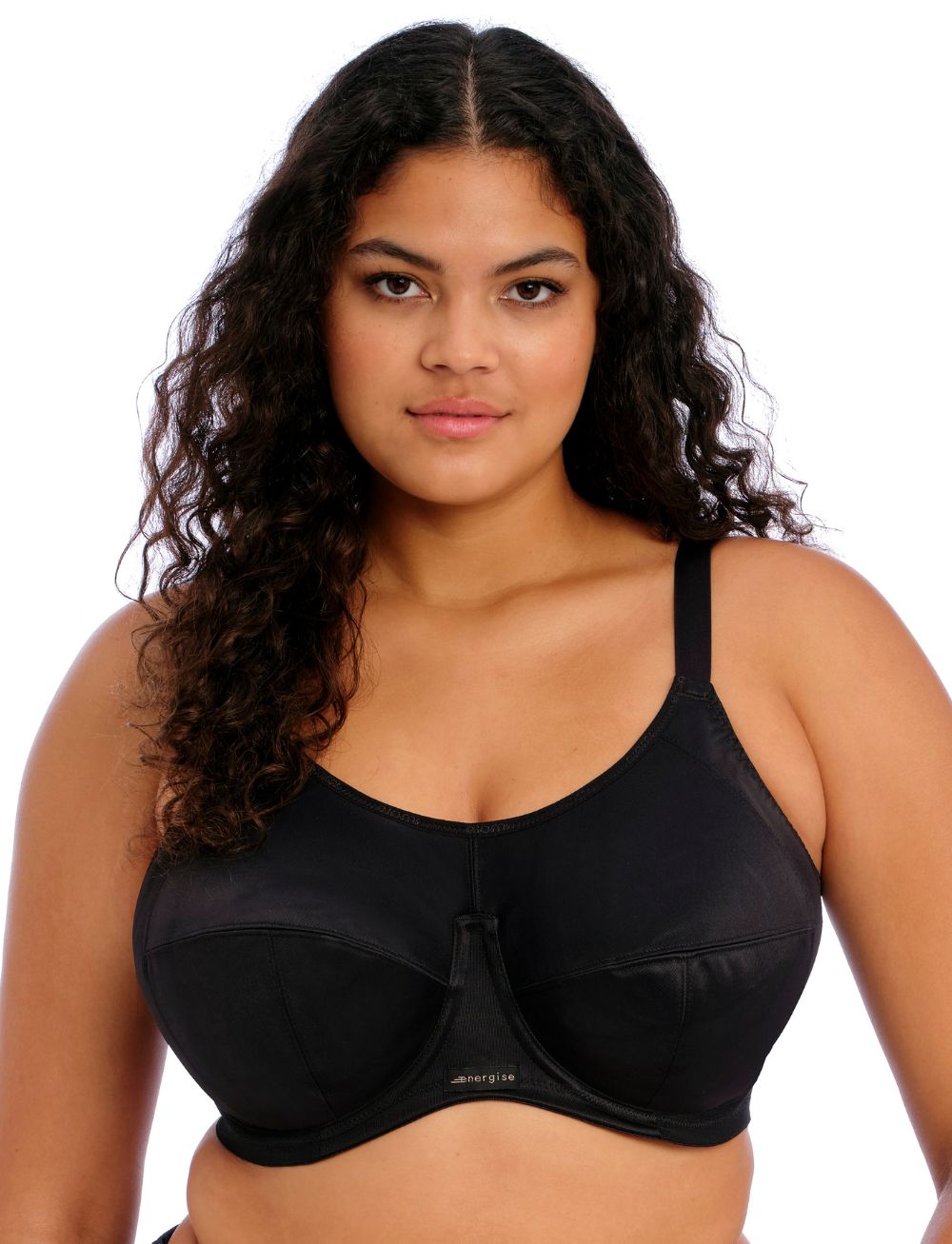
For medium-impact (gym, cycling, dance), Elomi Energise is a popular option, with a J-hook racerback converter for extra control when needed. For low-impact (yoga, pilates, walking): many underwire or wirefree styles work well. See our wirefree sports bras and racerback sports bras for those options.
Finding your size in a sports bra
Sports bras often fit slightly differently to everyday bras in the same size — the construction is firmer and the band may feel tighter. This is intentional: a sports bra's band needs to stay completely stable during high-impact movement. A sports bra should fit more firmly than your everyday bra, and many women wear a sister size or a different size, so try on and test rather than going by the number. Our fitting team can advise on sports bra fit specifically — it's a frequent fitting conversation.