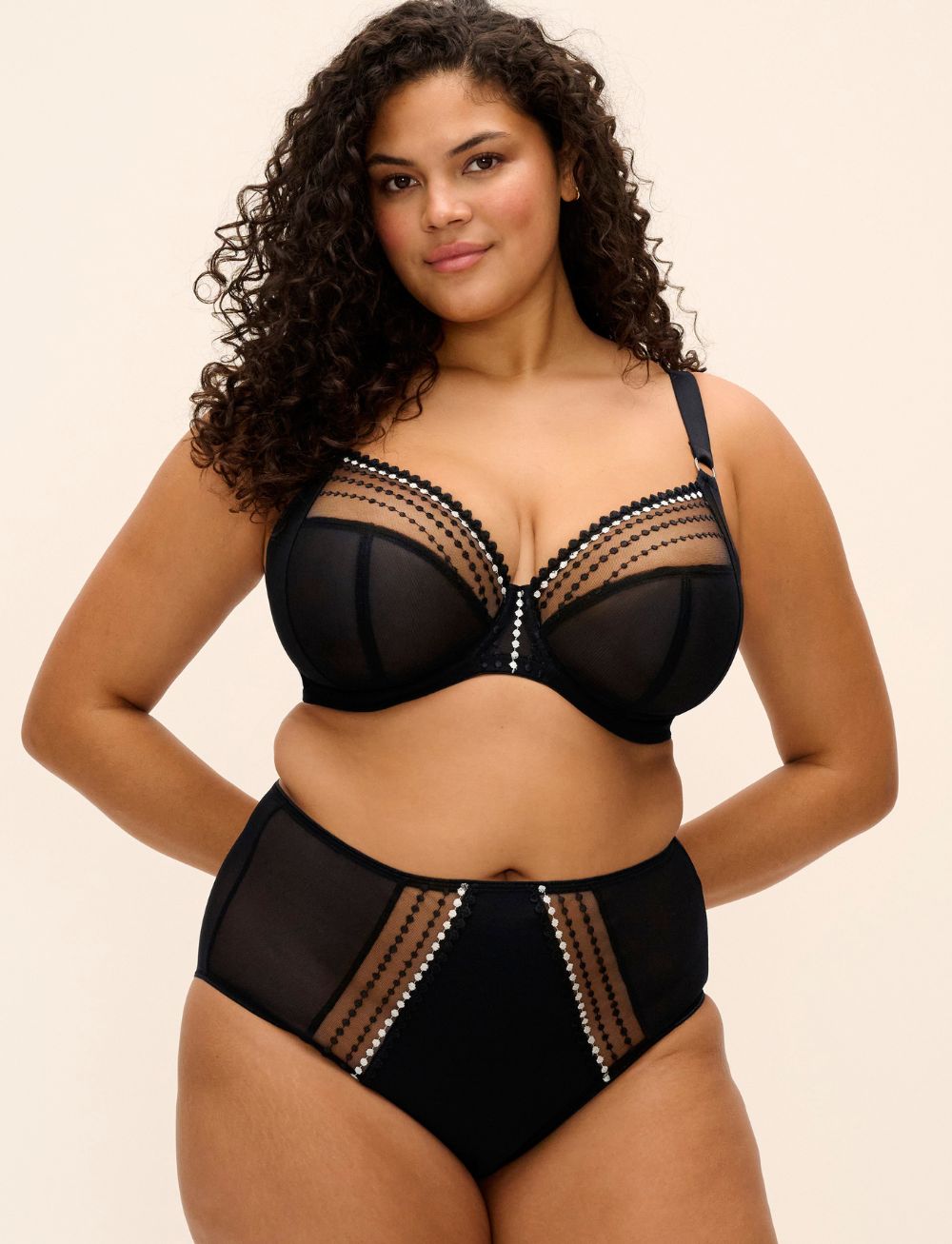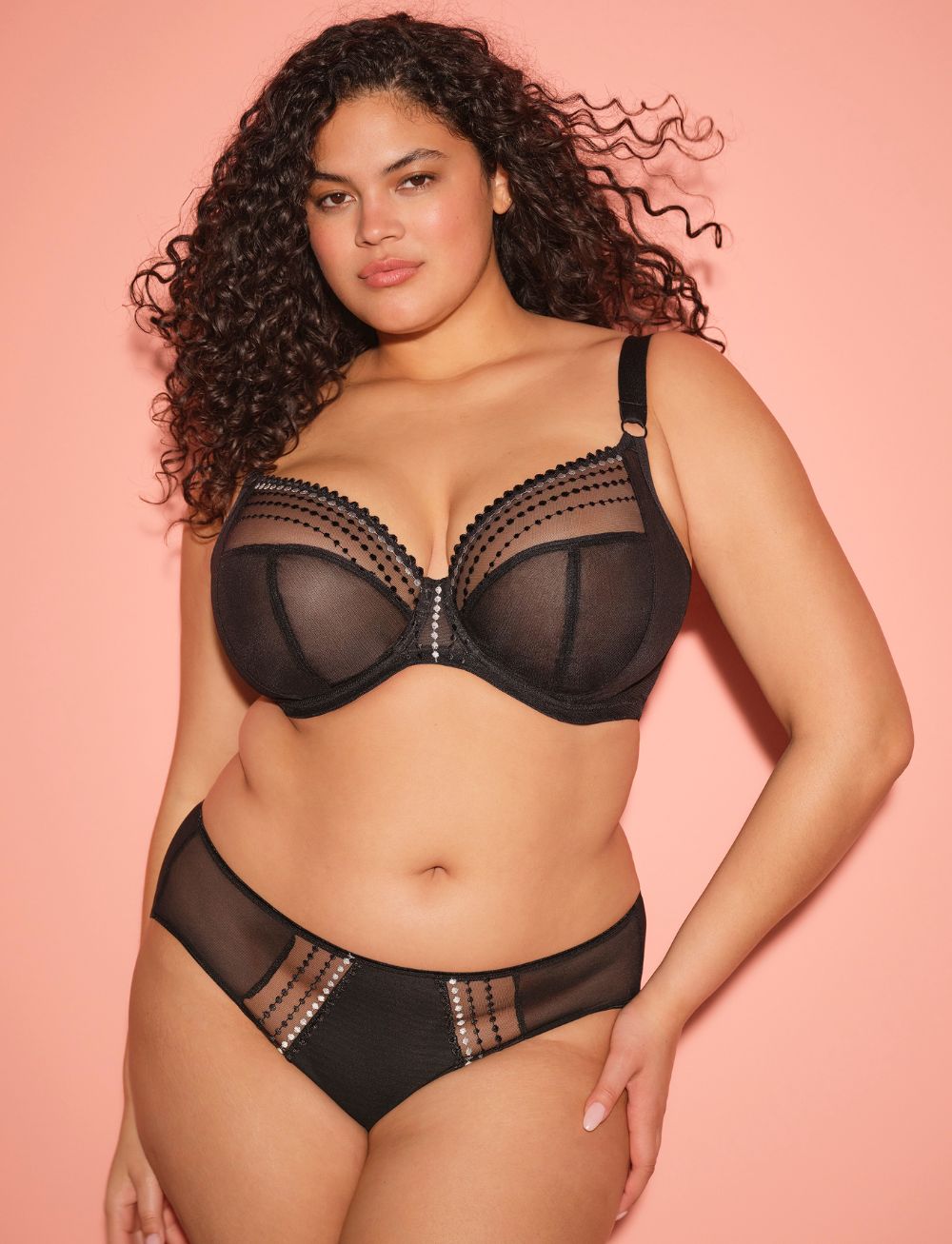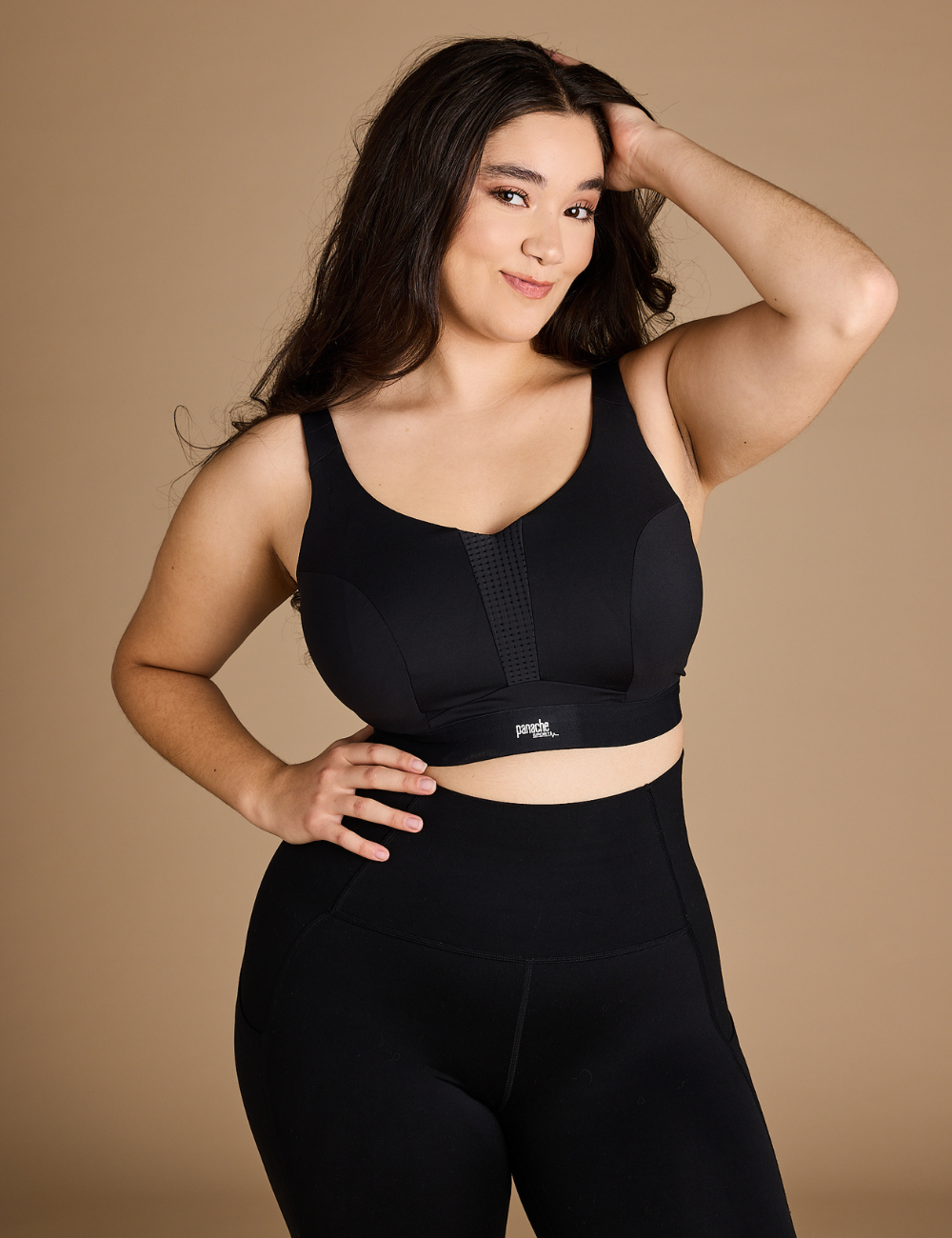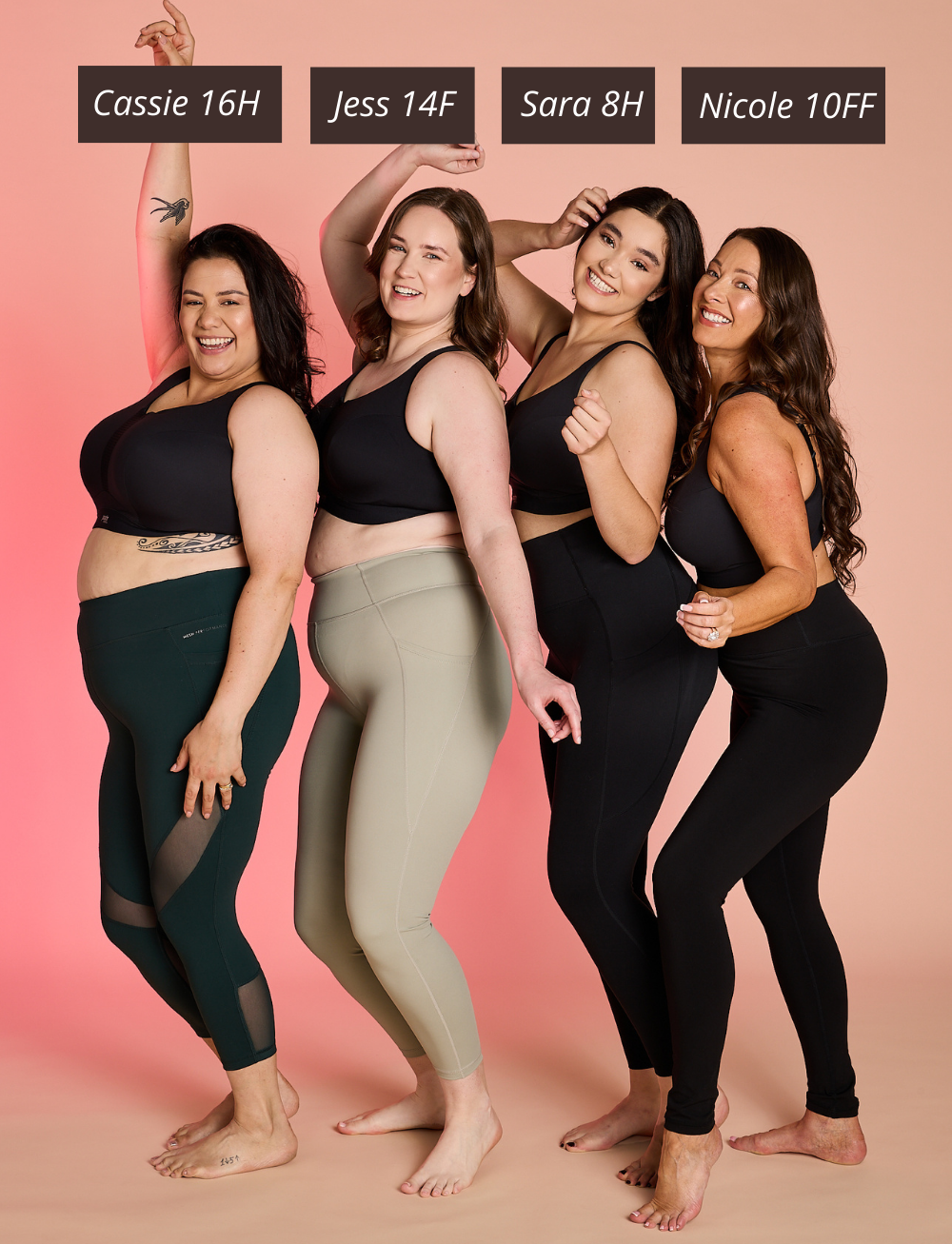

If you rip your bra off the moment you walk through the front door, you're not alone. Most women have never worn a bra that truly fits — not because well-fitting bras don't exist, but because mainstream fitting methods consistently produce the wrong result. Discomfort has become so normalised that it feels like just how bras are.
It doesn't have to be. At Brava, our fitters see the same fitting problems daily across our stores in Melbourne, Sydney, and Brisbane. The signs are recognisable, the fixes are straightforward, and getting your size right makes an immediate, tangible difference. Here are eight signs your bra doesn't fit — and exactly what to do about each one.
1. Your back band is riding up
Your back band should sit level — the same height all the way around, not creeping up toward your shoulder blades. A band that rides up is almost always a band that's too loose.
This matters because your bra band provides around 80% of your total support. When the band rides up and loses its anchor, your straps take over — bearing weight they were never designed to carry. That's what causes the shoulder grooves, neck ache, and upper-back tension that many women have written off as just how bras feel.
The fix: Go down a band size. If you're in a 16, try a 14. You'll likely need to go up at least one cup size at the same time to maintain the same cup volume — this is sister sizing (more on that below). The band should feel snug on the loosest hook when new. You should be able to slide two fingers underneath it, but it shouldn't pull away by more than a few centimetres.

2. Your cups are overflowing
Breast tissue spilling over the top, sides, or bottom of the cup is a clear sign the cup is too small. The double-ridge effect — sometimes called "quad boob" — where the cup edge cuts across breast tissue and creates a secondary bulge — is one of the most common signs our fitters see.
Overflow can also happen with the wrong style rather than strictly the wrong size. A demi or balconette that sits too low across a fuller bust can leave tissue unsupported at the top even if the cup volume is technically correct.
The fix: Go up one cup size and reassess. If you're regularly experiencing overflow, consider whether the style suits your breast shape as well as your size. Our fitters will tell you whether you need more volume, more coverage, or a different cup profile.

3. Your cups are gaping or wrinkling
Fabric puckering at the top of the cup, or the cup bowing away from your breast when you lean forward, usually means the cup is too large. But it can also mean the style isn't suited to your breast shape.
A shallow cup on a projected breast will gape because it can't contain the forward volume. A full cup on a less-projected shape may gape at the top because there's nothing to fill it. Getting both size and shape right is what a proper fitting achieves.
The fix: Try going down a cup size. If gaps persist, the issue is likely breast shape rather than size — which is exactly what a Brava fitting is designed to resolve. Book a fitting and our fitters will work through both size and style.
4. Your straps are digging in or constantly slipping off
Straps that leave marks in your shoulders or slide off constantly are almost always a band problem, not a strap problem. When a band is too loose, straps pull tighter to compensate — that's the source of the pressure. Straps that slide off often mean the band is riding up and taking the straps with it.
The fix: Address the band size first. Straps are a secondary adjustment once the band is right. They should be taut but not tight — two fingers should slide underneath comfortably. If straps still slip after fixing the band, try a style with a closer strap placement or a J-hook option.
5. The underwire is sitting on breast tissue
Your underwire should sit in the crease where your breast meets your chest wall, completely encircling the breast tissue without touching any of it. If the wire sits on breast tissue at the sides or front, your cup is almost certainly too small. If it's digging into your ribcage, the band may be too tight or the style may not suit your body.
An underwire that fits correctly is completely unnoticeable. One that doesn't fit is all you can think about — and it's fixable.
The fix: Try going up a cup size. The wires on a larger cup are set wider apart and should wrap around breast tissue rather than sitting on it. Brands like Freya and Panache are known for well-shaped underwires — Panache's are broader and more anatomically curved, Freya's slightly narrower. If digging is consistent across brands, a fitting will identify whether you need a different wire shape.
6. You have shoulder, neck, or back pain
Regular pain in the shoulders, neck, or upper back that reliably eases when you remove your bra is a functional sign that something isn't working. This is usually straps carrying too much load (a band-size issue), an incorrectly positioned underwire, or a cup that's too small.
Can wearing the wrong bra cause breast pain? Yes — particularly if the underwire is pressing on breast tissue or lymph nodes. Many women who experience cyclical breast tenderness find that switching to a correctly fitted bra reduces discomfort significantly.
The fix: Reassess your band size first. A firmer, correctly fitting band takes the load off your shoulders entirely. If pain continues after fixing the band, consider underwire placement and whether you need a fuller-coverage cup style.
7. You're wearing the bra on the tightest hook
Bras are designed with multiple hook rows so that as the elastic stretches with wear, you move to a tighter hook. A new bra should fit well on the loosest hook. If you bought a bra and immediately fastened it on the middle or tightest hook, the band was already too large for you.
This is extremely common among women who've been measured using methods that add several inches to the band measurement. If your bras feel too loose within a few months of buying them, this is almost certainly why.
The fix: When trying bras, always start on the loosest hook. The tighter hooks are your future adjustment room, not your current comfort level.
8. You haven't been fitted in years — or ever
Bra size changes throughout life — with weight fluctuations, hormonal changes, pregnancy, breastfeeding, perimenopause, and simply getting older. A size that fit five years ago may not be right today. Many women are still wearing the size they were fitted as teenagers, without accounting for how their body has changed since.
This is the most overlooked sign of a wrong bra size: the absence of any obvious sign, simply because you've never been properly measured as your current self.
The fix: Get refitted. It can take less than 20 minutes, it's free at Brava, and the difference is immediate. Our fitters work with D–LL cup sizes every day and can find your correct size, shape, and style in a single visit.
What is the 2-finger bra test?
The 2-finger band test is a quick way to check your band fit at home. Slip two fingers — held flat, not stacked — under your back band. They should slide in snugly but move freely. If you can pull the band away from your back by more than a few centimetres, it's too loose. If you can barely fit two fingers under, it may be too tight (though a new bra on the loosest hook should feel snug).
Understanding sister sizing
Sister sizing is useful when you're between sizes or a specific size isn't available. Going up a band size means going down a cup size to maintain the same cup volume — and vice versa. A 14E is a sister size to a 16DD and a 12F — all have the same cup volume, just in different band widths.
In practice, most women feel the difference in the band — a sister size is a useful substitute, not an identical replacement.
How to find out your correct bra size
A professional fitting is more reliable than measuring at home. Tape measure formulas — particularly the ones that add 4 or 5 inches to the underbust — consistently produce too-big bands and too-small cups. Most of the problems described in this article trace back to this. Brava fitters work directly from your body, not from a formula, and a fitting takes about 20 minutes.
If more than a couple of these signs feel familiar, one visit will resolve them. Brava offers free in-store fittings across Melbourne, Sydney, and Brisbane — or online via our free ZoomFit service. Browse our full range.