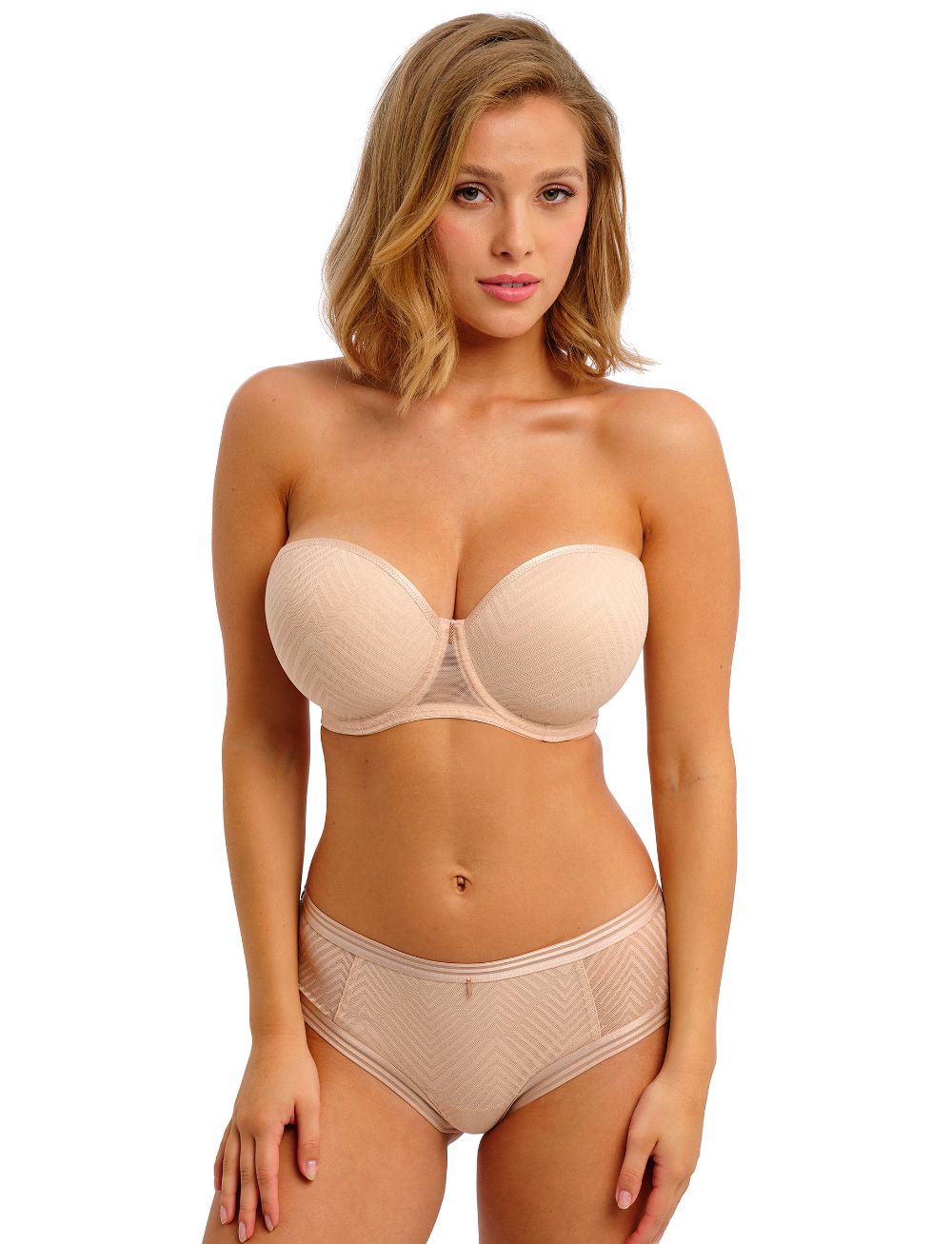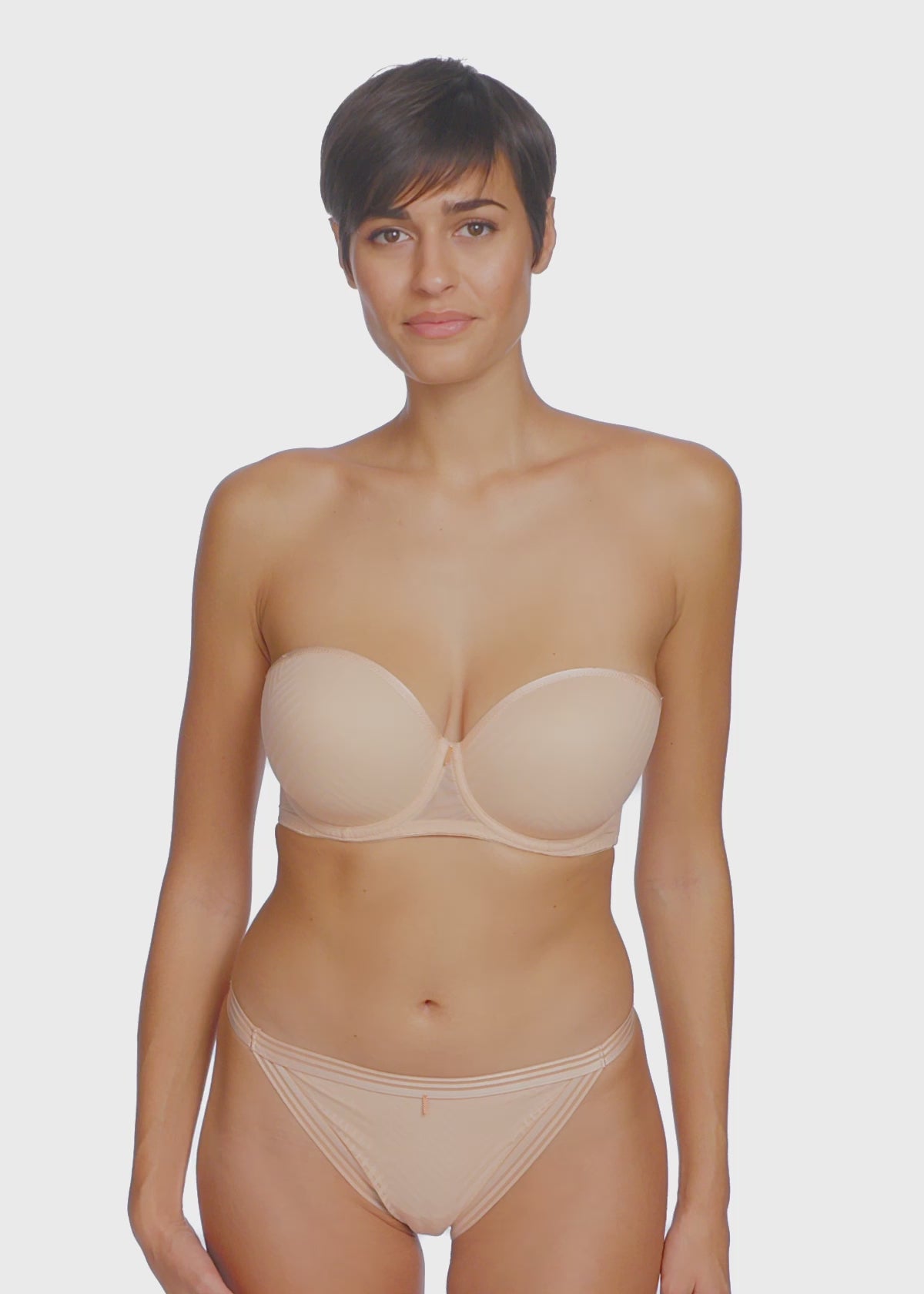
Pregnancy Bra Fitting Guide (Maternity Bras)
Nothing beats the expert advice that our bra fitters can give you during this precious time in your life. Our fitters are all trained in the needs of pregnant and breastfeeding mothers and can help you find the right size and style to suit your needs. If you'd like an expert eye, our fitters can help: book an in-store fitting, try ZoomFit over video, or submit the Virtual Fitter form.
If you're unable to visit a Brava store, the tips below will help you find the right bra fit for your maternity bra that will support your changing shape throughout pregnancy and after your baby is born. With the best maternity lingerie and nursing bra collections for bigger cups in Australia, D–KK cup in sizes 6 to 24, you will find one at Brava that's perfect for you.

Breast changes during pregnancy
Your body will change significantly during pregnancy. Your breasts will increase in size in a short amount of time, and they will feel heavier and more sensitive due to hormonal changes. Your milk ducts are also going through a process of being activated and require unrestricted support to help them function.
| Stage | What's happening | What to wear |
|---|---|---|
| 0–3 months | The most change happens here: milk ducts develop and your bust may increase by 2–3 cup sizes. Breasts may be very sore and sensitive. | A non-wired, stretchy, seamless maternity bra that grows with you. Fit on the tightest hook so you can loosen the band as your rib cage expands. |
| 3–7 months | Breast growth slows but your rib cage expands as your baby grows. Your breast size should stabilise around 7 months. | You may need to be fitted again if the back band is getting too tight. Get refitted if your current bra feels restrictive. |
| 7–9 months | Your bra should be fastened on one of the looser hooks by now. Only enough room in the cup to slip a flat hand in (not a fist). | Close to birth, consider a wirefree bra for hospital during delivery and for the following few weeks. |
Why a maternity bra matters
Hormonal change during pregnancy can result in rapid fluctuations in your breasts. The skin and tissue are placed under considerable strain. A structured and supportive maternity bra will protect your breasts against ligament damage, relieve breast strain, allow for breast growth, and give you support and comfort.
Maternity bras have multiple rows of hooks and eyes, many more than a normal bra. This design allows room for you to extend the back band as your diaphragm expands during pregnancy, then tighten it once your baby is born and your rib cage returns to normal. A normal bra usually only offers three hooks and eyes, and is unlikely to cater to your growing shape.
Seams and stitching across the nipple area or unlined bras can cause irritation on already sensitive and tender breasts. Most maternity bras have either concealed seams or seams designed carefully to avoid the nipple area. Fabrics are carefully selected to avoid potential irritation, and most maternity styles feature soft cotton fabric lining.
The key point: wearing a normal underwire bra during pregnancy can place pressure on your milk ducts, resulting in blockages or mastitis. A maternity bra is designed to cope with rapid change as your body changes.
After your baby is born
| Stage | What's happening | What to wear |
|---|---|---|
| First 4 weeks | Your breasts will swell and may become quite hard as your milk comes in. Mastitis becomes more common. | A wirefree maternity bra is recommended due to breast fluctuations. A really comfortable, well-fitted bra is particularly important during this stage. |
| 4+ weeks | Your breasts start to settle as your milk supply is regulated. | You may find you can wear the maternity bras you were fitted in during months 7–9 of pregnancy. Fit on the loosest hook, as you would with an everyday bra. |

Wirefree or flexiwire?
Many women prefer underwire fashion bras, however rigid underwires are not recommended during pregnancy or breastfeeding. When breastfeeding, the breasts can fluctuate as milk is produced and removed. Retained fluid in late pregnancy can also cause the breast to swell. A rigid underwire may put pressure on the breast when it is fuller, which can lead to blocked milk ducts or mastitis.
| Style | How it works | Best for |
|---|---|---|
| Wirefree | Ultra-soft and comfortable with enough support without any underwire | The first trimester, immediately following birth, sleep, and women who prefer no wire at all |
| Flexiwire | A flexible plastic support, similar to an underwire, designed to flex and change position with your changing shape | Women who prefer the feel of an underwire bra. The Australian Breastfeeding Association has maintained that a well-fitted flexiwire bra is less likely to cause problems than a normal underwire bra. |
Fitting tips for pregnancy bras
- It's normal for your breasts to increase and your rib cage to expand during pregnancy, resulting not only in a few cup sizes bigger than normal but also a bigger back size.
- At all stages of pregnancy and breastfeeding, ensure you can comfortably run your fingers between your rib cage and your bra band. If the bra band feels too tight, try a bigger back size.
- Be aware of breast tissue under your arm. This should be comfortably encased within your bra cup. No wires should press on this delicate area.
- When trying on maternity bras, undo the clips and pull down the cup. This should be easy to do, and your nipple should sit outside of the A-frame or sling.
- Maternity bras should provide good bust support and not flatten or squash your breast. They should be separated and fit comfortably into each cup.
- The cups and straps should not slip while breastfeeding.
Find the right maternity bra
The fastest way to a maternity bra that actually fits is having an expert fitter put eyes on you. Brava fittings come with no obligation to buy.
- Book an in-store fitting at any of our stores in Camberwell, Highpoint, Moorabbin or Sydney.
- Try ZoomFit: a private one-on-one fitting via video call from anywhere in Australia.
- Submit the Virtual Fitter form for personalised size and style recommendations by email within 24–72 hours.
Or browse our full maternity and nursing bra collection online. Brava supports high-quality maternity bra designers who have considered the needs of pregnant and breastfeeding mothers and created beautiful, supportive, and functional lingerie.
Common questions
When should I switch to a maternity bra?
The right time to be fitted into a maternity bra is when your breasts begin to noticeably swell to the point that your existing bras no longer fit or become uncomfortable. This is usually towards the end of the first trimester.
What's the difference between a maternity bra and a nursing bra?
They're designed the same way, with extra rows of hooks so the band can adjust as you change and no rigid underwire. A nursing bra adds clips so you can drop a cup to feed. In Australia the two names are often used interchangeably, and the maternity bras we stock have nursing clips, so you can wear one through pregnancy and keep wearing it once your baby arrives. Many women wear a nursing bra through the last few months of pregnancy so they're ready for feeding from day one.
How many maternity bras do I need?
We recommend you have three maternity bras in rotation: one to wear, one in the wash, and one ready to wear. Your breasts may leak milk, so they will need to be washed more often than your regular bras.
Can I sleep in a maternity bra?
If you feel more comfortable sleeping in a maternity bra, a seamless wirefree style is a great option. It's supportive, easy to drop down for feeding, and you can easily slip in nursing pads. We do not recommend sleeping in an underwired or flexiwire bra.
How do I care for my maternity bras?
Maternity bras should be hand-washed in mild soap. They do not require soaking in bleach or nappy treatment solutions, as this will weaken the fabric and may cause skin irritation. Look after your bras and they should last throughout your pregnancy and for several months afterward. See our lingerie care guide for more detail.
Ready to find your perfect fit?
Brava's expert fitters can help. Choose what works best for you.
In-store fitting
Book online at any of our stores in Camberwell, Highpoint, Moorabbin or Sydney. Walk-ins are welcome too, except at Brava HQ Moorabbin (appointment only).
Book in-store →ZoomFit
A private, one-on-one bra fitting via video call from anywhere in Australia.
Book ZoomFit →Virtual Fitter
Submit photos and details — we’ll email personalised size and style recommendations within 24–72 hours.
Try Virtual Fitter →